

What materials are used in tensile structures is one of the most important questions when planning a modern architectural project, At eurosys, we combine engineering expertise, premium materials, and professional execution to deliver durable tensile solutions that withstand demanding environments while enhancing functionality and visual appeal, Understanding these materials helps you make confident project decisions.
Ready to Start Your Next Project?
Get a free consultation and a detailed quote from EuroSys for Metal Industries. We handle design, fabrication and installation, from concept to handover.
What materials are used in tensile structures?
The answer to What materials are used in tensile structures involves several engineered components that work together to provide strength, durability, and architectural flexibility, as follows:
- High-performance membrane fabrics serve as the primary covering element, creating weather-protected spaces while maintaining lightweight characteristics that reduce structural loading requirements.
- Structural steel forms the main support framework, providing stability and load-bearing capacity necessary for long-term operation in commercial, public, and recreational environments.
- High-strength steel cables distribute forces throughout the system, maintaining membrane tension and supporting the overall geometry required for structural efficiency.
- Anchoring systems connect the structure safely to foundations, ensuring reliable performance under varying wind conditions and operational loads.
- Connection hardware is specifically engineered to transfer loads between membranes, cables, and steel supports while maintaining structural integrity over time.
- Protective coatings help prevent corrosion and environmental deterioration, extending the service life of exposed steel components in outdoor applications.
- Foundation systems are designed according to project requirements, soil conditions, and expected structural loads to ensure long-term stability.
- Advanced engineering calculations determine the interaction between all components, helping achieve optimal performance while maintaining safety standards.
- Material selection influences durability, maintenance requirements, lifecycle costs, and overall project value throughout years of operation.
- Modern tensile structure engineering integrates these materials into a cohesive system capable of delivering reliable performance and attractive architectural results.
- The combination of specialized materials allows large covered areas to be constructed efficiently without excessive structural weight.
- Understanding What materials are used in tensile structures helps project owners evaluate quality, performance expectations, and long-term investment value.
Membrane Materials Used in Tensile Shades
Membranes are among the most important tensile structure materials because they provide coverage, visual impact, and environmental protection, as follows:
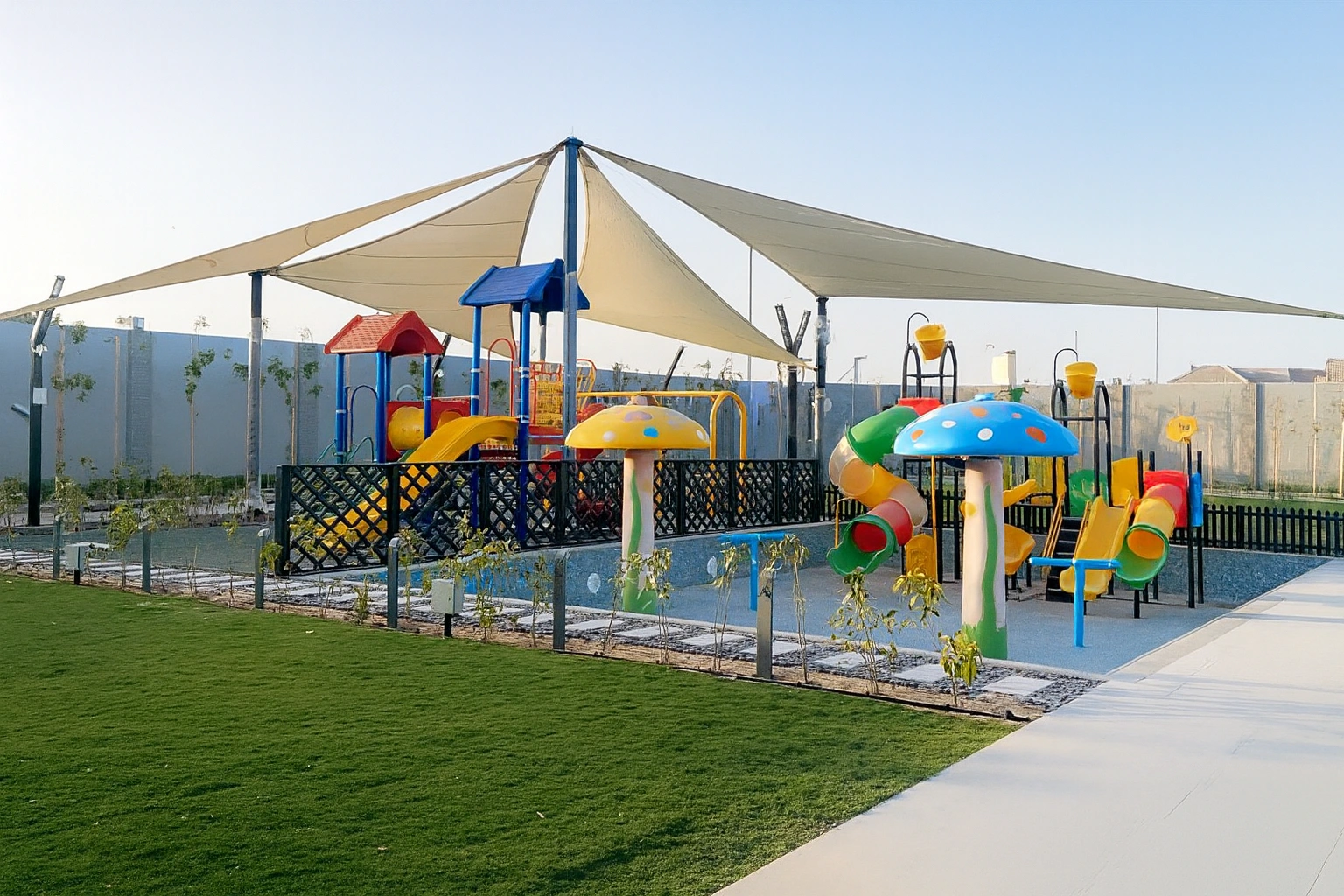
- PVC-coated fabrics are widely used due to their balance of durability, flexibility, affordability, and suitability for a broad range of tensile structure applications.
- PTFE-coated fiberglass membranes offer exceptional longevity, excellent resistance to ultraviolet exposure, and superior performance in demanding environmental conditions.
- ETFE membrane systems provide lightweight solutions with high light transmission, making them suitable for projects requiring natural illumination.
- Membrane selection depends on project location, climate conditions, expected lifespan, maintenance objectives, and architectural requirements.
- Quality membrane materials help maintain shape stability while resisting tearing, weathering, and degradation caused by prolonged outdoor exposure.
- Advanced membrane manufacturing processes ensure consistent material performance and compliance with engineering specifications.
- Proper membrane design contributes significantly to drainage efficiency, preventing water accumulation and improving long-term operational reliability.
- Modern architectural fabric structures use carefully engineered membrane geometry to achieve both aesthetic appeal and structural effectiveness.
- Membrane color options allow project owners to match branding requirements, architectural themes, and functional objectives.
- Fire performance characteristics are evaluated during material selection to ensure compliance with relevant construction and safety standards.
- High-quality membranes reduce maintenance requirements and contribute to lower lifecycle costs throughout the project’s operational period.
- When evaluating What materials are used in tensile structures, membrane selection remains one of the most influential factors affecting appearance and performance.
Structural Steel and Support Systems
Structural steel for Tensile Shades provides the backbone that supports membranes and transfers loads safely throughout the entire system, as follows:
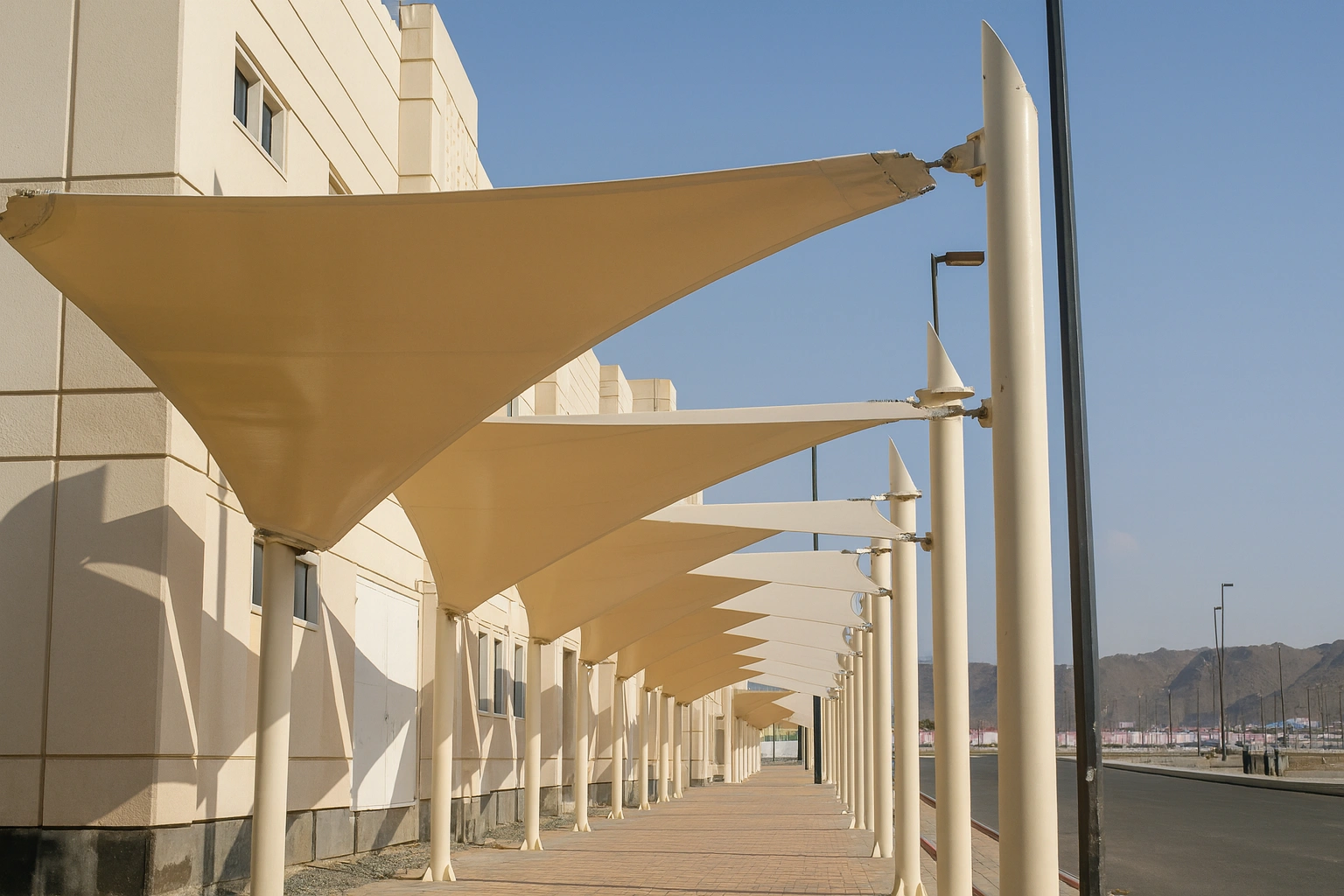
- Steel support systems provide exceptional strength while maintaining design flexibility for a wide variety of project configurations.
- Carefully engineered columns, beams, and support members ensure reliable performance under wind loads and operational conditions.
- Structural steel enables large-span designs that create open, unobstructed spaces suitable for public and commercial applications.
- Engineering calculations determine the required dimensions and specifications for each steel component before fabrication begins.
- Modern steel Tensile Shades achieve excellent structural efficiency while maintaining attractive architectural forms.
- Fabrication processes include cutting, welding, shaping, and assembly procedures that ensure dimensional accuracy and quality control.
- Steel components can be customized to accommodate unique project requirements, architectural preferences, and site constraints.
- At eurosys, exterior steel components can receive powder coating finishes that provide excellent resistance against weather exposure and corrosion.
- Epoxy coating systems are also used for outdoor applications, creating additional protection while enhancing durability and appearance.
- These protective finishing systems help maintain structural integrity and reduce maintenance requirements over extended operational periods.
- High-quality support systems contribute directly to tensile structure durability and long-term project performance.
- Understanding What materials are used in tensile structures requires recognizing the critical role steel plays in achieving safety, stability, and reliability.
Why Material Selection Matters in Tensile Structure Performance
Selecting the right materials directly affects performance, safety, maintenance requirements, and project lifespan, as follows:
- Material quality influences the ability of a structure to withstand environmental conditions, including wind, sunlight, moisture, and temperature fluctuations.
- Properly selected membrane structure materials maintain their performance characteristics for extended periods while reducing operational risks.
- High-grade steel components improve load-bearing capacity and structural reliability under demanding conditions.
- Protective coatings help preserve material quality by minimizing corrosion and environmental deterioration.
- Durable materials contribute to reduced maintenance costs and fewer operational interruptions throughout the structure’s service life.
- Material compatibility ensures that membranes, cables, steel supports, and anchoring systems function efficiently as an integrated system.
- Engineering teams evaluate environmental conditions before selecting materials suitable for specific project locations.
- Reliable materials improve installation efficiency by reducing adjustments, replacements, and performance-related issues during construction.
- Long-term performance depends heavily on selecting components that meet engineering requirements and quality standards.
- Quality materials enhance visual appearance while preserving functionality over years of exposure to outdoor environments.
- Clients benefit from improved return on investment when durable materials reduce future repair and replacement expenses.
- Understanding What materials are used in tensile structures helps decision-makers prioritize quality rather than focusing solely on initial project costs.
Why Tensile Shades Deliver Long-Term Value for Modern Projects
Modern construction projects increasingly rely on innovative solutions that combine performance, aesthetics, and efficiency, as follows:
- Tensile Shades provide lightweight construction systems capable of covering large areas while minimizing material consumption and structural complexity.
- Their architectural flexibility allows unique forms that enhance project identity and create visually distinctive environments.
- Efficient material usage contributes to cost-effective construction compared to many conventional roofing alternatives.
- Large column-free spans improve functionality for public spaces, recreational facilities, educational campuses, and commercial developments.
- Fast installation processes help reduce project timelines and minimize site disruption during construction activities.
- Modern tensile architecture supports both practical requirements and contemporary design objectives.
- Durable materials and protective coatings contribute to reliable long-term performance with manageable maintenance requirements.
- Weather-resistant Tensile Shades provide effective protection from sunlight and environmental exposure while maintaining visual appeal.
- Flexible design possibilities allow customization according to site conditions, operational requirements, and aesthetic preferences.
- Engineering optimization ensures structural efficiency while maintaining safety and durability standards.
- These advantages make tensile solutions attractive for organizations seeking long-term value and operational efficiency.
Comprehensive Engineering and Construction Solutions by Eurosys
eurosys provides integrated project solutions that support clients from concept development through final delivery and long-term support, as follows:
- Shades and Fences systems designed for residential, commercial, and industrial applications requiring effective environmental protection.
- Steel structure fabrication and installation for light and medium-scale industrial, commercial, and public projects.
- Laser cutting services for metal sheets, decorative patterns, and customized architectural elements requiring high precision.
- Decorative laser-cut panel solutions for facades, fences, gates, canopies, and architectural enhancement projects.
- Powder coating services that improve durability, corrosion resistance, and appearance for metal components.
- Road marking services for highways, parking facilities, industrial zones, and urban infrastructure projects.
- After-sales support focused on maintaining performance, reliability, and customer satisfaction throughout project operation.
In conclusion, What materials are used in tensile structures is a critical question for achieving reliable performance and long-term durability, eurosys combines quality materials, engineering expertise, and professional execution to deliver successful projects, Prioritizing material quality helps maximize value, efficiency, and long-term operational success.
Frequently Asked Questions About What materials are used in tensile structures
What materials are commonly used in Tensile Shades?
Tensile Shades typically use membrane fabrics, structural steel, cables, anchoring systems, and connection hardware to ensure durability, stability, and weather resistance.
Why is structural steel important in Tensile Shades?
Structural steel provides essential support, carries loads safely, enables large-span designs, and enhances the overall strength and durability of the structure.
What protective coatings are used for tensile structure steel?
Powder coating and epoxy coating are commonly used to protect steel from corrosion, improve durability, and increase resistance to outdoor weather conditions.
Ready to Start Your Next Project?
Get a free consultation and a detailed quote from EuroSys for Metal Industries. We handle design, fabrication and installation, from concept to handover.
Get your solution today with professionally engineered Tensile Shades designed for durability, performance, and visual appeal, Benefit from expert design, quality materials, reliable installation, and long-term support tailored to your project requirements.
Related Articles: