

The Installation Process of Tensile Structures plays a critical role in determining the safety, durability, and long-term performance of any tensile project, Whether the structure is designed for commercial facilities, public spaces, parking areas, or recreational developments, proper installation ensures that every component functions according to engineering specifications.
Ready to Start Your Next Project?
Get a free consultation and a detailed quote from EuroSys for Metal Industries. We handle design, fabrication and installation, from concept to handover.
At eurosys, every tensile structure project is executed through a comprehensive approach that combines professional engineering, precision manufacturing, and expert installation practices, Understanding the Installation Process of Tensile Structures helps project owners make informed decisions while ensuring maximum return on investment and reliable performance for years to come.
Why Proper Installation Is Critical for Tensile Structure Performance
A successful tensile structure depends not only on quality materials and innovative design but also on professional installation, Proper execution ensures that loads are distributed correctly throughout the structure, reducing stress on individual components and enhancing overall stability.
Accurate installation also preserves the intended architectural form, ensuring the structure maintains both its functional and visual value, Correct alignment of steel supports, anchors, and membrane systems helps prevent premature wear and minimizes future maintenance requirements.
Professional installation improves resistance against environmental conditions such as wind loads, temperature fluctuations, and continuous sunlight exposure, It also ensures proper drainage performance, preventing water accumulation that could negatively affect structural integrity over time.
Most importantly, a well-executed Installation Process of Tensile Structures contributes directly to long-term safety, operational reliability, and reduced lifecycle costs.
Initial Site Assessment and Project Planning
Every successful project begins with a detailed site assessment, Before fabrication or installation starts, engineers evaluate the project location to understand environmental conditions, foundation requirements, accessibility, and operational objectives.
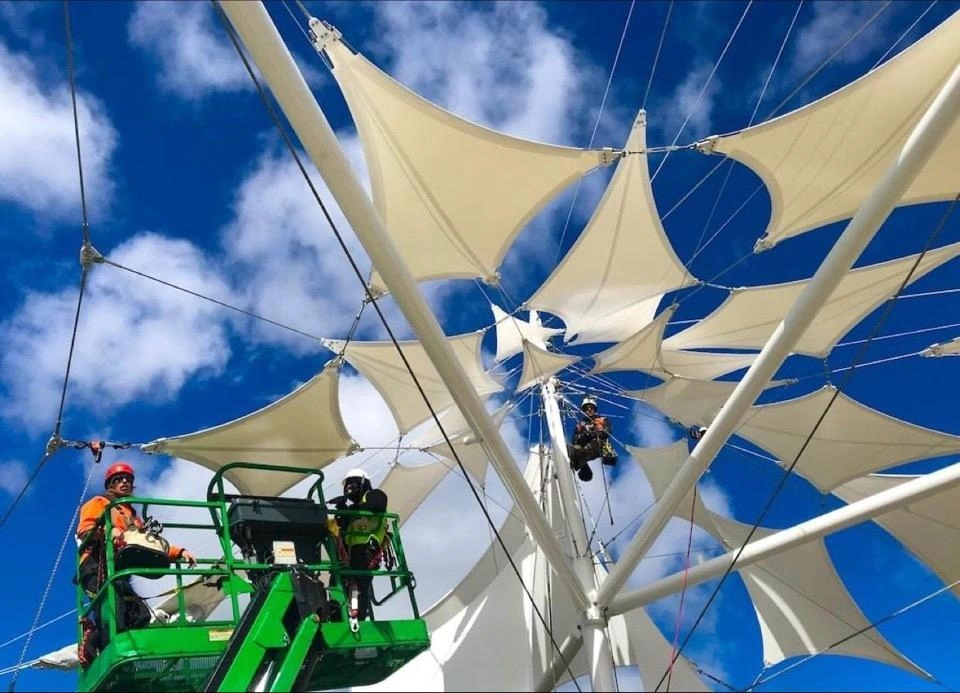
Key planning activities include:
- Measuring site dimensions and identifying installation constraints.
- Assessing soil conditions and foundation requirements.
- Evaluating wind exposure and environmental influences.
- Determining access routes for equipment and materials.
- Establishing safety requirements and project timelines.
Thorough planning helps avoid delays, improve efficiency, and ensure that all project stakeholders work according to a unified execution strategy.
Structural Design and Engineering Calculations
Engineering design transforms project requirements into a safe and functional tensile structure, During this stage, engineers perform detailed calculations to determine how the structure will respond to environmental loads and operational demands.
The design process typically includes:
- Structural load analysis.
- Wind load calculations.
- Membrane geometry development.
- Steel support design.
- Connection and anchoring design.
Advanced engineering software allows accurate modeling of every component before manufacturing begins, This helps identify potential challenges early while ensuring all parts integrate smoothly during installation.
A properly engineered design forms the foundation of a successful Installation Process of Tensile Structures, reducing installation difficulties and supporting long-term performance.
Fabrication of Steel Components and Support Structures
Once the design is finalized, steel components are manufactured according to approved engineering drawings, Precision fabrication is essential because even minor dimensional inaccuracies can affect installation quality and structural performance.
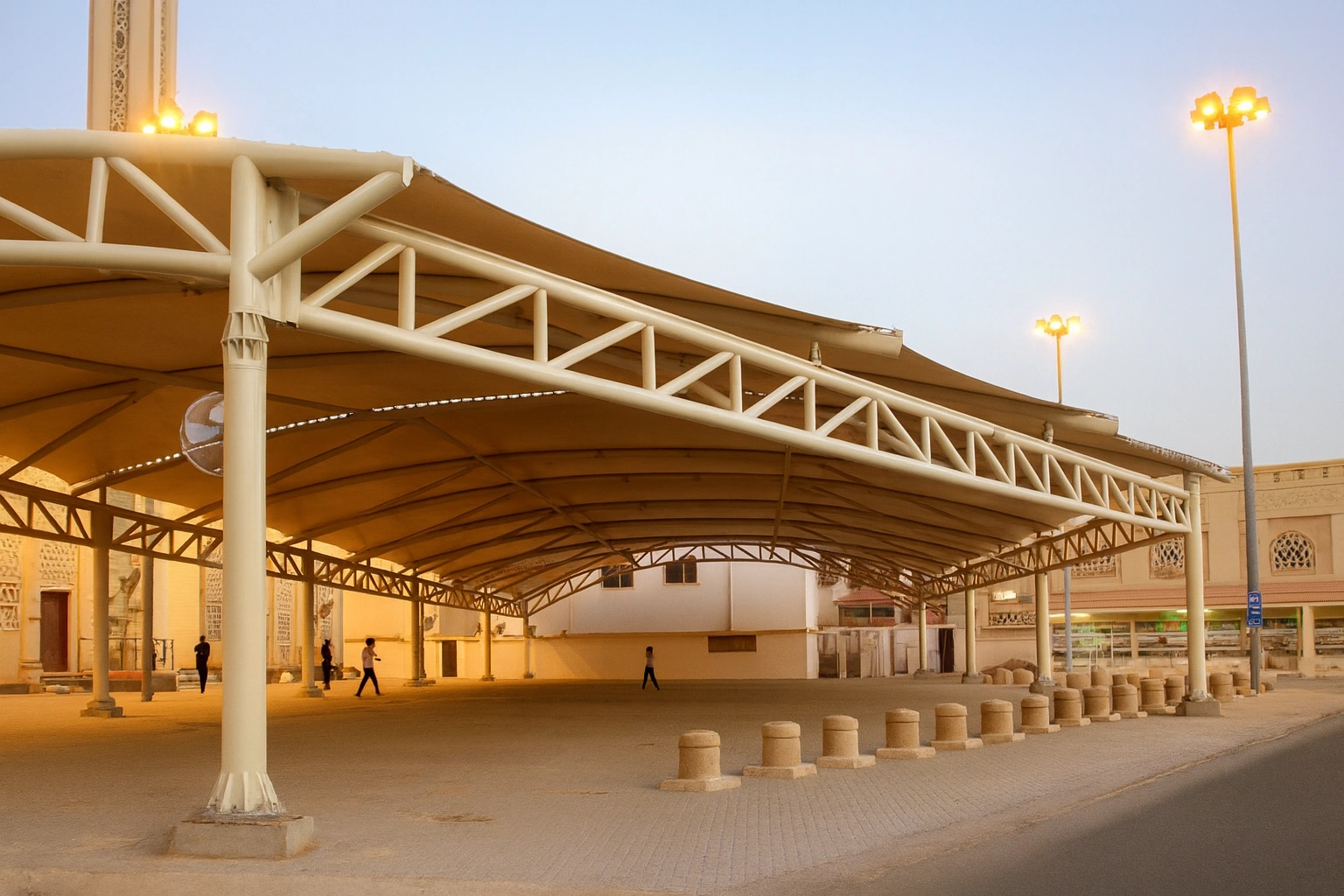
The fabrication process generally includes:
- Cutting and forming steel elements.
- Welding structural components.
- Quality inspections and dimensional verification.
- Surface preparation and finishing.
To improve durability, steel components are often protected using advanced finishing systems such as Powder Coating and Epoxy Coating, These coatings help resist corrosion, weather exposure, and long-term environmental wear.
High-quality fabrication simplifies on-site assembly while ensuring structural reliability throughout the life of the project.
Manufacturing and Preparation of Tensile Membranes
The tensile membrane is one of the most important elements within the entire structure, Its quality directly influences appearance, drainage efficiency, and long-term durability.
Membrane manufacturing involves:
- Developing detailed production drawings.
- Selecting suitable membrane materials.
- Precision cutting and shaping.
- Creating high-strength welded seams.
- Performing quality inspections.
Proper manufacturing ensures accurate dimensions and reliable performance during installation, Careful packaging and transportation procedures further protect membrane materials before arrival at the project site.
Well-manufactured membranes contribute significantly to the success of the Installation Process of Tensile Structures by ensuring smooth installation and effective tension distribution.
Step-by-Step Tensile Structure Installation Process
The actual installation stage follows a carefully planned sequence designed to maximize safety, efficiency, and structural accuracy.
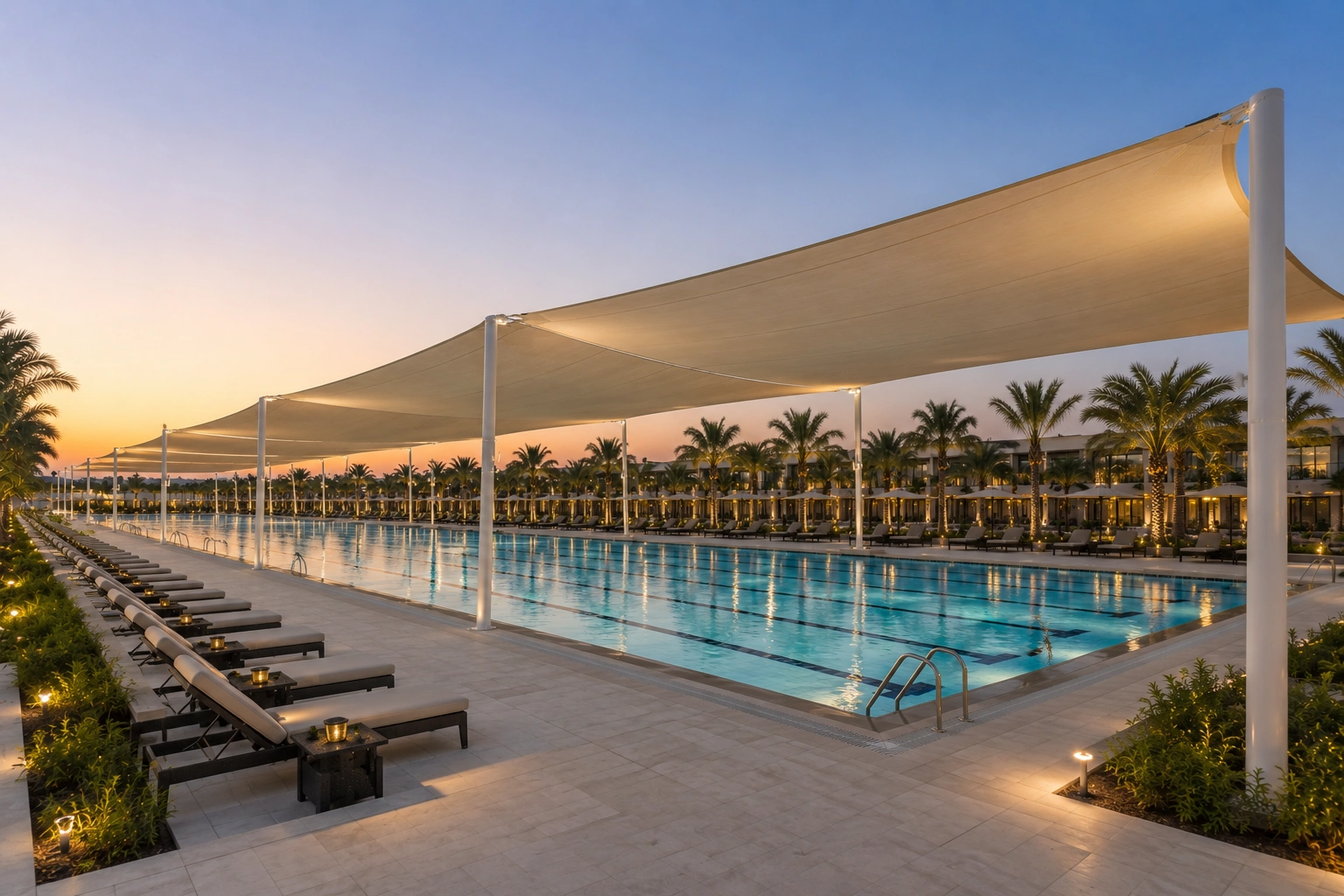
1. Site Preparation
The project site is prepared before structural assembly begins, This includes completing foundations, organizing equipment access, and establishing safe working conditions for installation teams.
Proper preparation minimizes delays and supports efficient project execution.
2. Installation of Steel Structures
Steel columns, support frames, and primary structural elements are installed according to engineering drawings, Throughout this stage, alignment and positioning are continuously verified to ensure accuracy.
Anchors, support hardware, and connection assemblies are then installed and inspected before proceeding to membrane installation.
3. Membrane Installation
Once the steel framework is ready, the tensile membrane is carefully positioned using specialized lifting equipment and professional installation techniques.
The membrane is attached to the support system according to approved installation procedures while maintaining strict quality control standards.
4. Controlled Tensioning
Tensioning is one of the most critical phases within the Installation Process of Tensile Structures, Specialized techniques are used to gradually apply tension to the membrane until the required geometry and load distribution are achieved.
Proper tensioning ensures:
- Structural stability.
- Uniform load transfer.
- Effective drainage.
- Long-term membrane performance.
- Preservation of architectural appearance.
5. Quality Inspections and Final Adjustments
Before project completion, engineers conduct detailed inspections to verify:
- Structural alignment.
- Membrane tension levels.
- Connection integrity.
- Drainage performance.
- Overall safety compliance.
Any necessary adjustments are completed before final approval and handover.
Key Benefits of Tensile Shade Structures for Modern Outdoor Projects
Modern projects increasingly rely on tensile structures because they combine functionality, efficiency, and architectural appeal.
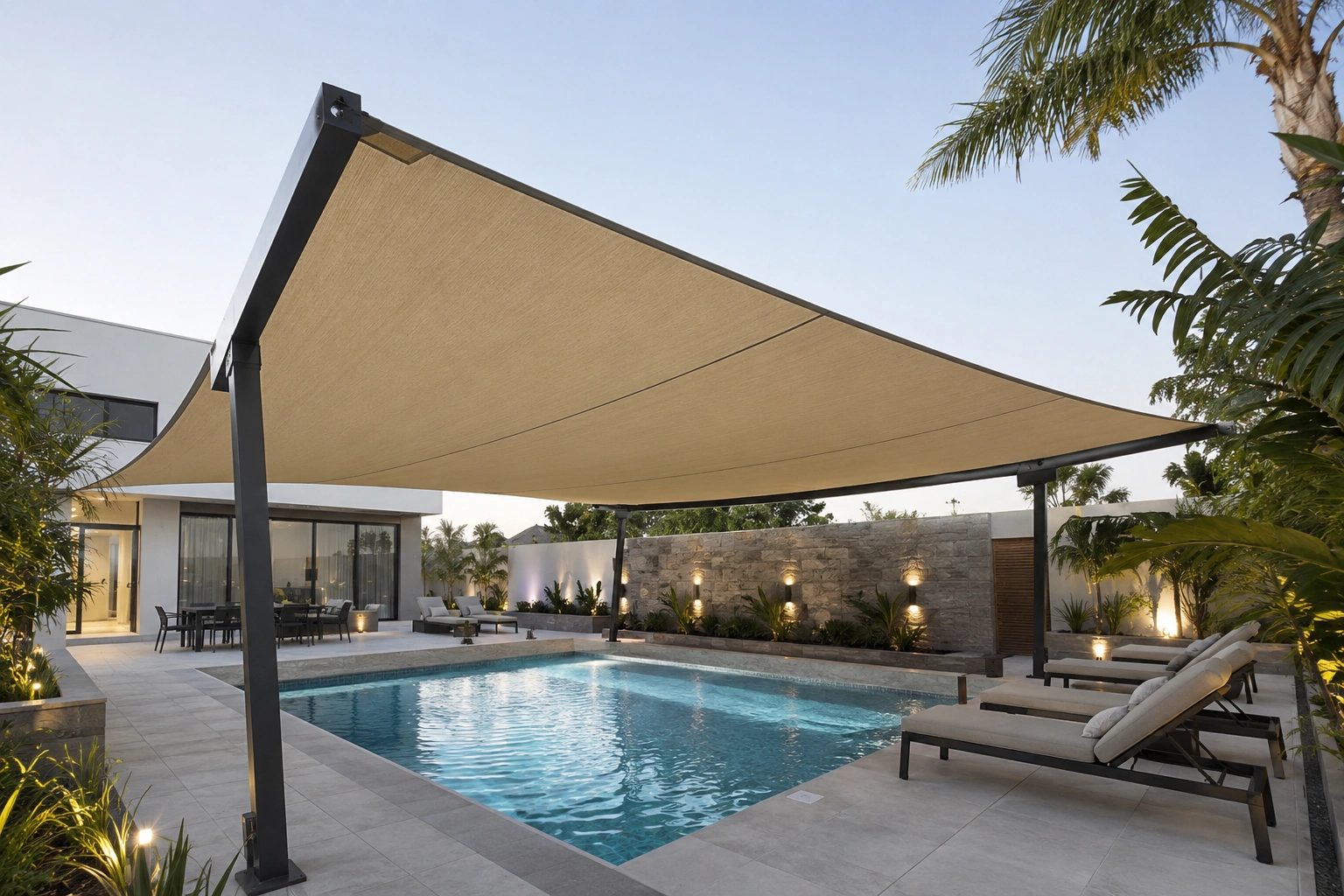
Key advantages include:
- Effective protection from sunlight and weather conditions.
- Lightweight construction with large clear-span coverage.
- Flexible and visually attractive designs.
- Reduced structural weight compared to traditional construction.
- Enhanced user comfort in outdoor environments.
- Efficient use of available space.
- Strong resistance to environmental loads.
- Long-term durability with minimal maintenance requirements.
These benefits make tensile structures ideal for parks, walkways, parking areas, commercial facilities, public spaces, and private developments.
Why Choose eurosys for Tensile Structure Design, Fabrication, and Installation
Selecting the right project partner is just as important as choosing the right design, eurosys offers complete solutions covering every stage of the Installation Process of Tensile Structures, from initial design through fabrication, installation, maintenance, and after-sales support.
Key advantages include:
- Experienced engineering teams.
- Advanced design technologies.
- Precision manufacturing facilities.
- Professional installation crews.
- Comprehensive quality control systems.
- Durable steel structures and support systems.
- Specialized Powder Coating and Epoxy Coating services.
- Long-term maintenance and technical support.
This integrated approach ensures consistency, reliability, and high-quality results throughout the entire project lifecycle.
In conclusion, Installation Process of Tensile Structures directly influences safety, durability, and long-term performance, By partnering with eurosys, you benefit from professional engineering, quality manufacturing, and precise installation practices that help ensure lasting value and reliable project success.
Frequently Asked Questions About Installation Process of Tensile Structures
How long does the installation process of tensile structures typically take?
The timeline depends on project size, complexity, site conditions, and fabrication requirements, Smaller projects may take only a few days, while larger custom structures may require several weeks.
What factors affect the installation of tensile structures?
Site conditions, foundation requirements, environmental loads, structural dimensions, accessibility, material availability, and engineering complexity all affect project execution.
Why is professional installation important for tensile structures?
Professional installation ensures proper assembly, accurate membrane tensioning, structural safety, compliance with engineering standards, and reduced maintenance costs throughout the structure’s service life.
Ready to Start Your Next Project?
Get a free consultation and a detailed quote from EuroSys for Metal Industries. We handle design, fabrication and installation, from concept to handover.
Get your solution today with professionally engineered Tensile Shades designed for durability, comfort, and visual appeal, Benefit from expert design, quality manufacturing, and reliable installation that delivers long-term value for your project.
Related Articles: