

Hot-dip galvanizing is generally the better option for outdoor steel structures exposed to moisture, salt, soil, impact, or harsh industrial conditions. Hot-dip galvanized steel provides barrier and sacrificial corrosion protection, while powder-coated metal is better suited to moderate environments where color, texture, and a smooth decorative outdoor steel finish are priorities.
Ready to Start Your Next Project?
Get a free consultation and a detailed quote from EuroSys for Metal Industries. We handle design, fabrication and installation, from concept to handover.
The appropriate protective coating depends on the exposure environment, steel type, expected service life, appearance requirements, color range, maintenance access, and scratch risk. When a project requires both durable corrosion protection and a customized finish, a duplex coating that combines hot-dip galvanizing with powder coating may be considered as part of industrial metal finishing.
What Is Hot-Dip Galvanizing?
How does galvanizing work?
Hot-dip galvanizing covers fabricated iron or steel by immersing the cleaned and prepared metal in molten zinc, typically at approximately 450°C. The process forms metallurgically bonded zinc-iron alloy layers, topped by an outer layer of zinc, so the coating is more than a superficial film.
What protection does zinc provide?
Zinc creates a physical barrier between steel and environmental exposure. If limited areas of steel become exposed, zinc can also provide sacrificial, or cathodic, protection that helps protect the affected area.
Which applications suit it?
relates to uses where steel faces outdoor exposure, mechanical wear, or difficult maintenance conditions. Typical applications include:
- Outdoor structural steel and columns exposed to changing weather conditions.
- Barriers, fences, and railings that may face impact, abrasion, or scratches.
- Lighting-related structures installed in outdoor environments.
- Components located near soil or exposed to rain, humidity, salts, or industrial pollutants.
- Metalwork where maintenance access is difficult and conventional organic coatings may be damaged.
Actual coating thickness and service performance depend on the applicable specification, steel thickness, product category, coating quality, corrosion class, and exposure conditions.
How Does Powder Coating Work?
How is powder applied?
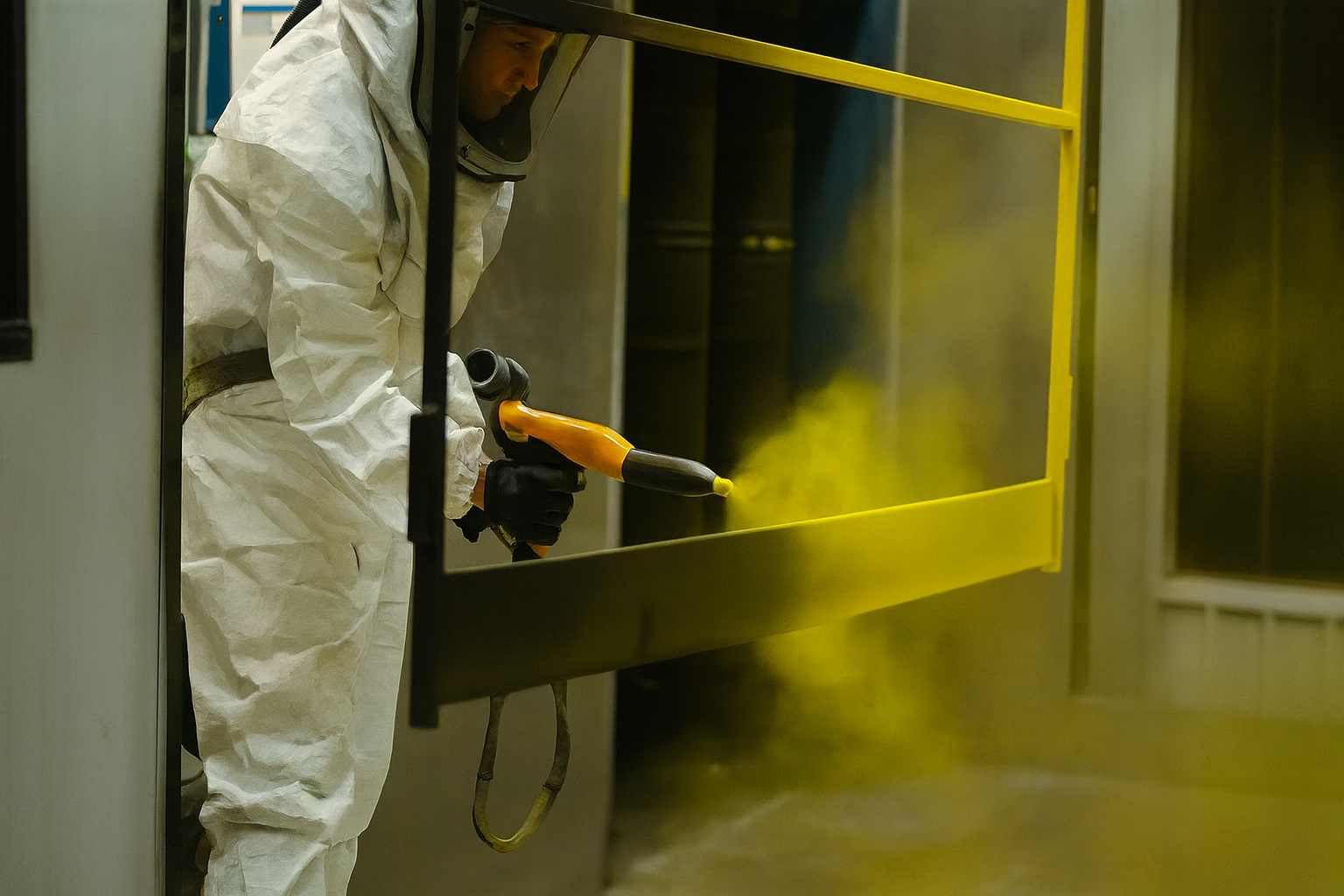
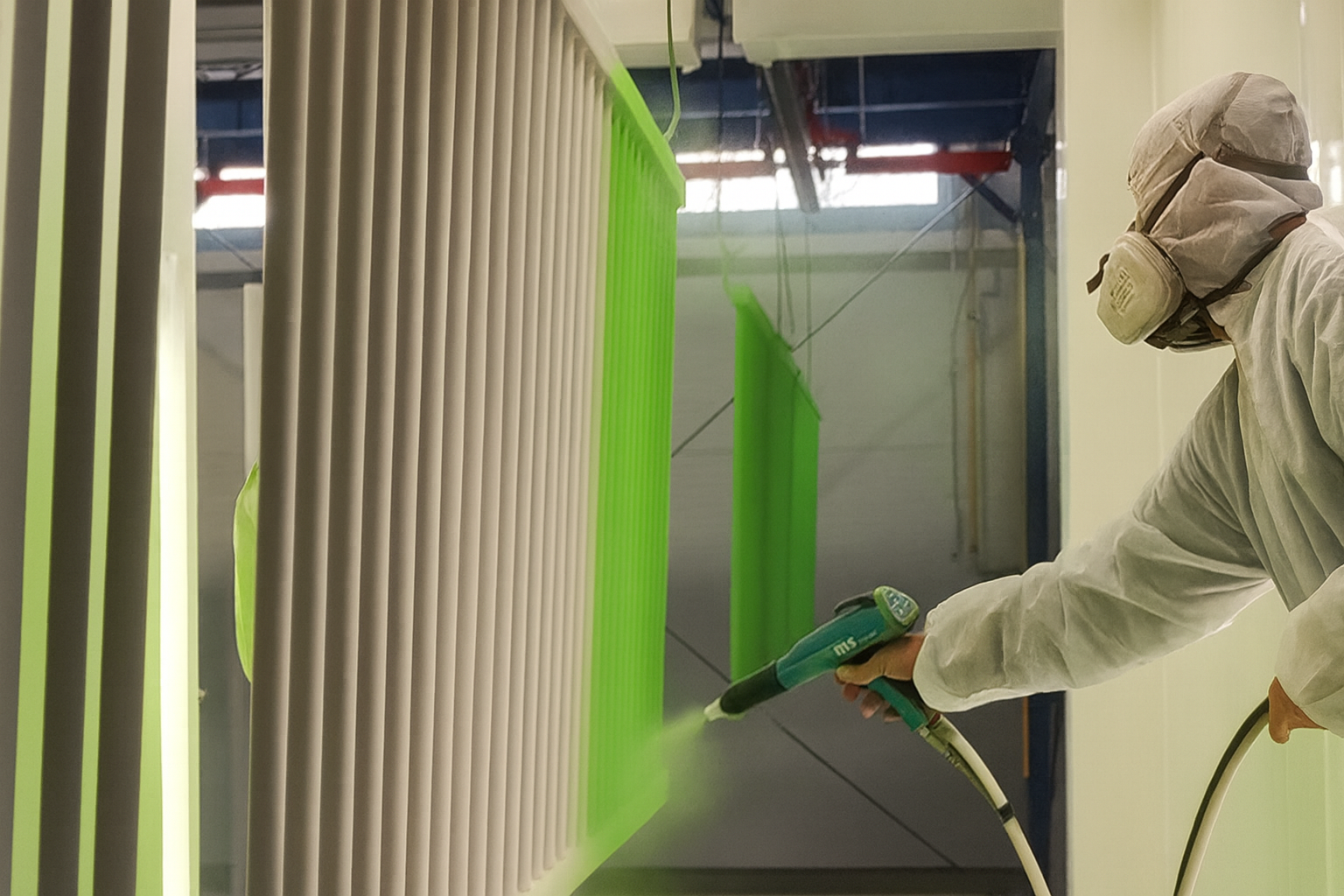
Powder coating is a dry finishing process where electrically charged resin powder is applied to a prepared metal surface. The coated metal is then cured with heat, allowing the powder to form a continuous, solid film.
Which finishes are available?
Powder coating formulations can be selected to meet appearance and performance requirements, including weather exposure and chemical resistance. The process can deliver consistent color, gloss, texture, and a smooth architectural appearance across a wide range of decorative finishes.
- Polyester: Suitable for systems designed for atmospheric exposure.
- Epoxy: Selected where chemical resistance is required.
- Hybrid systems: Combine properties from different resin types.
- Fluoropolymer-based options: Used where specific appearance and performance requirements apply.
What affects coating performance?
Coating performance depends on thorough degreasing, removal of salts and contaminants, surface treatment, and proper weld and edge preparation. Suitable powder selection, correct film thickness, and controlled curing temperature and time also affect the final result.
Exterior polyester systems can vary in resistance to ultraviolet radiation, fading, chalking, and loss of gloss depending on the resin, pigment, color, curing quality, and site conditions. Powder coating acts mainly as a barrier; if a deep scratch, chip, or delamination exposes steel, corrosion may begin at the damaged area or beneath the coating edge.
How Do They Compare?
Which lasts longer outdoors?
Outdoor service life depends on the environment and the condition of the protective system rather than on one fixed lifespan. Galvanizing is often selected where extended corrosion protection is needed, while powder coating can remain effective when the substrate is properly prepared and the coating stays intact.
For either option, expected durability is affected by coating or zinc thickness, moisture, pollutants, chloride exposure, temperature, drainage, cleaning, impacts, and maintenance requirements.
Which handles scratches better?
Galvanizing may handle incidental scratches more effectively because zinc surrounding a limited exposed area can provide protection to the steel. This sacrificial action can reduce corrosion risk around minor damage.
Powder-coated surfaces depend on the continuity of the coating film. Localized damage can be more noticeable and may require careful repair, particularly where color matching is important. Severe damage, poor drainage, or unsuitable design can still lead to corrosion with galvanizing.
Which offers better appearance?
Powder coating generally offers greater flexibility for appearance, including custom colors, gloss levels, textures, and architectural styling. Its finished surface can look visually uniform when the application is properly completed.
Galvanizing usually has a metallic gray finish, which can vary based on steel chemistry and cooling conditions. When comparing the two systems, total cost of ownership should include preparation, transport, application, inspection, repair access, cleaning, recoating, and expected maintenance.
How Does the Environment Affect Choice?
What changes near the coast?
Coastal locations and areas exposed to sea spray contain chlorides and moisture that can increase corrosion risk. These conditions require robust corrosion protection and a clearly defined environmental classification.
How do heat and sunlight matter?
For outdoor projects in Saudi Arabia, heat should not be assessed alone. Humidity, salt exposure, dust accumulation, ultraviolet radiation, temperature variation, and proximity to industrial pollutants all affect material performance.
Ultraviolet exposure mainly affects organic resins and pigments. Over time, it may lead to fading, color change, chalking, or loss of gloss, depending on the resin, color, curing quality, and exposure conditions.
What role does dust play?
Dust can accumulate contaminants on surfaces and increase abrasion during cleaning. It may also conceal defects, making regular inspection more difficult.
The design should allow effective drainage, access, cleaning, and inspection to manage dust-related exposure over time.
Which industrial risks matter?
Industrial areas may expose metal surfaces to chemicals, pollutants, abrasion, or persistent moisture. The coating system should be selected according to the actual contaminants and applicable exposure category, not simply a generic indoor or outdoor classification.
Request the relevant environmental or corrosion classification and performance testing for the intended site. A product that performs suitably in one Saudi city or project may not deliver identical results in another location.
When Should You Choose Galvanizing?
When is durability the priority?
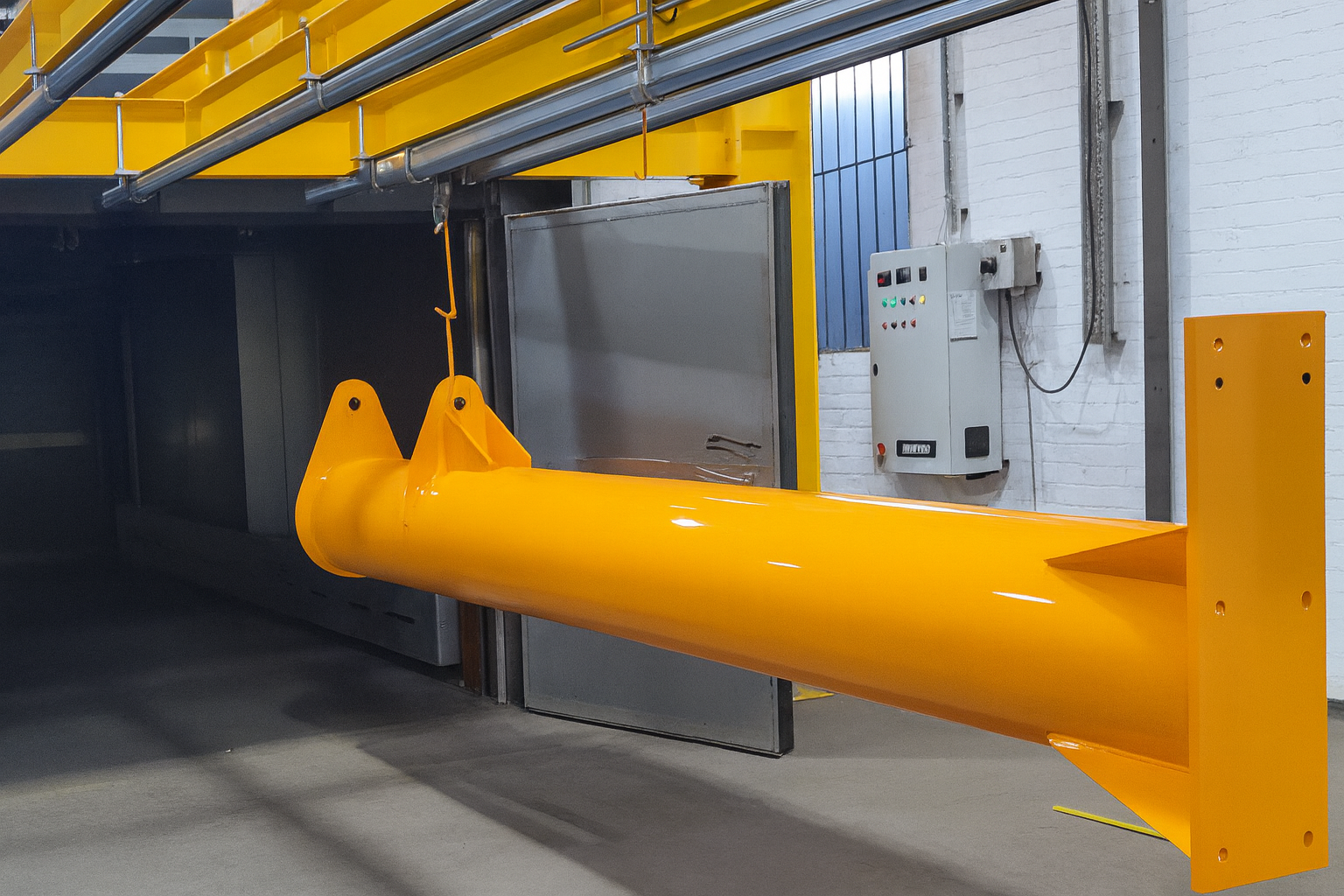
Choose hot-dip galvanizing when steel will remain outdoors and face rain, humidity, salts, soil contact, or occasional impact. It is also suitable where maintenance access is difficult or costly, including road marking-related metal components exposed to demanding conditions.
Which structures benefit most?
Hot-dip galvanizing is often appropriate for structures and components exposed to weather or industrial environments:
- Structural frames and columns can benefit from long-term protection in outdoor conditions.
- Barriers, fences, and railings are suitable where surfaces may face moisture, impact, and regular exposure.
- External supports and road-related metal components can require protection against rain, humidity, and salts.
- Infrastructure exposed to weather or industrial conditions can benefit from coverage around edges and complex surfaces.
The item must be suitable for the process and designed with appropriate venting, drainage, and fabrication details.
What should be checked before treatment?
Confirm the applicable galvanizing specification, product category, steel thickness, coating inspection requirements, design details, dimensional tolerances, and post-treatment handling requirements. Galvanizing does not remove the need for maintenance, so inspect drainage points, cut edges, weld areas, mechanical damage, trapped moisture zones, and locations affected by incompatible materials.
Frequently Asked Questions (FAQ) (concise Q&A)
Is hot-dip galvanizing better than powder coating?
Hot-dip galvanizing is generally better for severe outdoor corrosion exposure and impact. Powder coating is often more suitable for decorative customization in moderate environments, so the choice depends on site conditions and project requirements.
Can powder coating be applied over galvanized steel?
Yes, powder coating can be applied over galvanized steel as part of a duplex system. The galvanized surface must be properly cleaned and prepared, with a compatible coating and curing process selected.
Which option is better for coastal areas?
Coastal areas need stronger corrosion planning because salt and moisture increase corrosion risk. Galvanizing or a properly specified duplex system may be more suitable than powder coating alone, depending on exposure classification and maintenance planning.
Which finish offers more color choices?
Powder coating generally provides a wider selection of colors, gloss levels, and textures. Galvanizing usually creates a metallic gray finish with natural variation.
Can scratches cause corrosion under powder coating?
Yes, a deep scratch or chip that exposes the steel can allow corrosion to begin at the damaged area or beneath the coating edge. Repairs should follow the specified surface-preparation and touch-up procedure.
Ready to Start Your Next Project?
Get a free consultation and a detailed quote from EuroSys for Metal Industries. We handle design, fabrication and installation, from concept to handover.
There is no universal winner between hot-dip galvanizing and powder coating. Select galvanizing for demanding corrosion protection, powder coating for decorative flexibility in suitable environments, or a correctly specified duplex system when both protection and appearance are required. The final decision should reflect site exposure, steel design, maintenance access, appearance, total lifecycle cost, and the applicable technical
Related Articles: