

Powder coating is a dry finishing process in which electrically charged polymer powder is sprayed onto a prepared metal surface, then cured under heat until it forms a continuous, even finish. This method is widely used for metal structures, car shades, barriers, decorative panels, and other steel components that need a durable surface layer. But not every metal piece is automatically suited to this process — the outcome depends on the type of metal, its surface condition, the intended use of the piece, and whether it can withstand oven curing temperatures without warping or damage.
Ready to Start Your Next Project?
Get a free consultation and a detailed quote from EuroSys for Metal Industries. We handle design, fabrication and installation, from concept to handover.
Before sending any metal component for coating, several practical questions come up: how does the process actually work from surface prep to final cure, what factors influence the quality and durability of the finish, and what should be checked beforehand to avoid issues down the line? Understanding these points helps ensure the coated piece performs well under real conditions, whether it’s exposed to sun, moisture, or heavy daily use.
What is powder coating for metal?
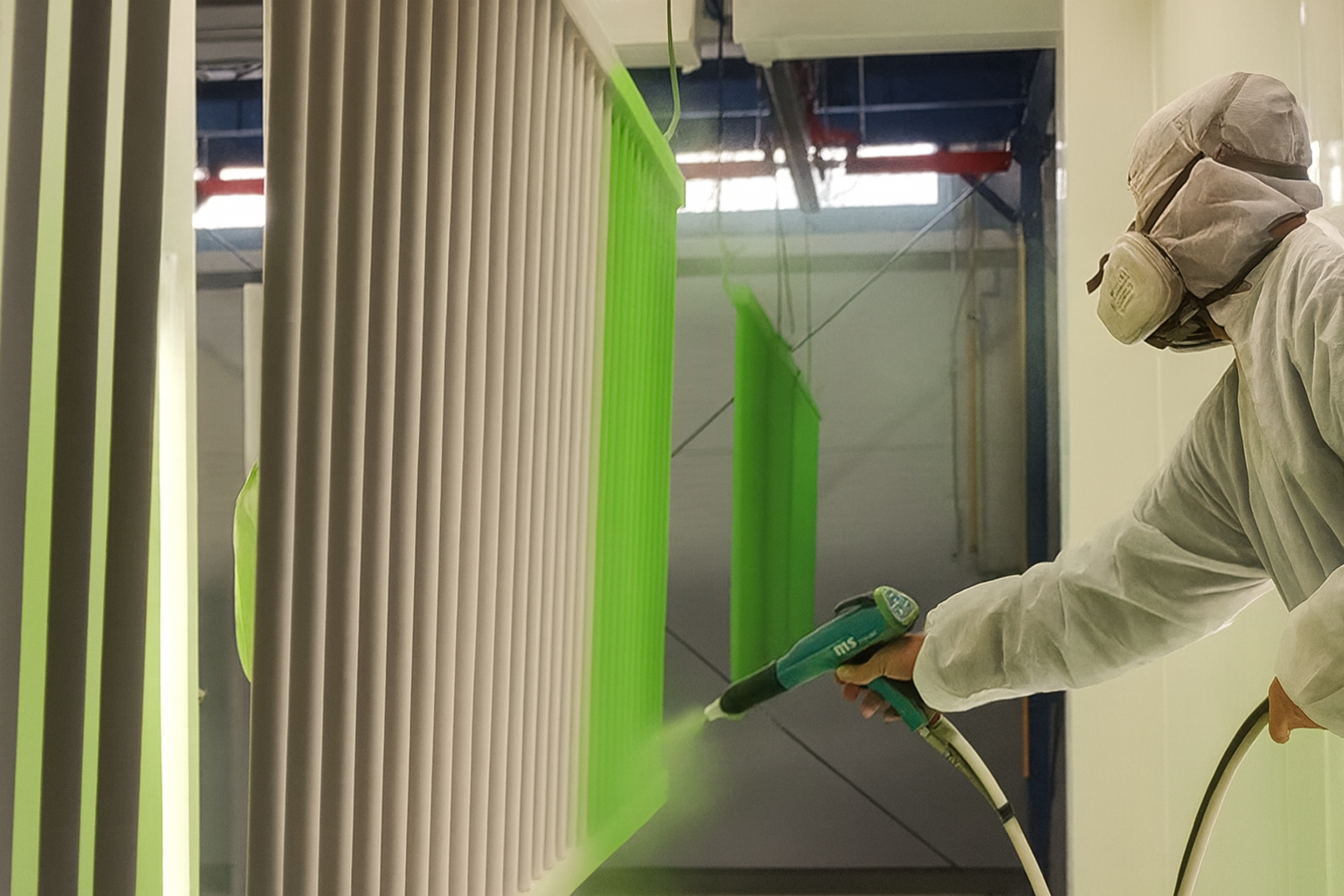 Powder coating is a dry finishing method applied to metal surfaces as fine particles that later fuse into a solid, continuous layer through heat. It differs from conventional liquid paint in both application and curing process, which shapes how it performs on structural and architectural metalwork.
What does the dry powder contain?
The dry powder used in this finishing process is made of fine particles combining several core components:
- Resin: forms the base material that becomes the solid film once cured.
- Pigment: provides the color and visual finish of the coated surface.
- Fillers: add bulk and influence the texture and durability of the layer.
- Additives: support flow, consistency, and overall performance of the finish.
How does electrostatic attraction hold the powder?
A spray gun gives the powder particles an electrical charge while the metal piece itself is grounded, creating an attraction that pulls the particles toward the surface. The charged particles cling to the metal before it enters the oven, where heat triggers curing and turns the loose powder into a continuous, uniform coating.
How is powder coating different from liquid paint?
The main distinction lies in how each finish is applied and set. Powder coating is applied dry and requires a heat-curing stage to form its final layer, while liquid paint relies on solvents and air-drying rather than electrostatic application. Neither method suits every project equally, and the right choice depends on the metal piece, its intended use, and the finishing outcome required.
Professional powder coating service for metal
Professional powder coating is a service that applies an electrostatically charged finish to metal pieces, producing a durable, even coat that stands up to outdoor conditions. Rather than selling a packaged powder or a home-use kit, this service is delivered to customers who need actual coating work carried out on their metal components.
Electrostatic Powder Coating for Metal
EuroSys provides an electrostatic metal-finishing service for customers seeking coating work on metal pieces, rather than a packaged powder or home-use kit. The process relies on charging powder particles so they bond evenly across every surface of a metal piece, including corners and edges that are harder to coat with liquid paint.
This service suits a wide range of metal structures and components that require a long-lasting, uniform finish.
- Even coverage: the electrostatic charge pulls powder particles toward the metal surface, reducing gaps and uneven patches.
- Durability: the cured coating resists weathering, making it suitable for structures exposed to outdoor conditions.
- Range of applications: the service covers structural steel, decorative laser-cut panels, and other metal components that need a finished, protective layer.
- Consistency: the process follows defined architectural powder coating standards to keep finish quality consistent across different projects.
How does the powder coating process work?
Powder coating follows a defined sequence: surface preparation, powder application, oven curing, cooling, and final inspection. Each stage affects how well the finish bonds to the metal and how long it holds up.
Preparing the metal surface
Before any powder goes on, the metal must be free of grease, dirt, rust, scale, or an existing coating that could interfere with adhesion. The right method depends on the metal type and its current condition.
- Cleaning: removes oils, dust, and light surface contamination before further treatment.
- Abrasive blasting: strips rust, mill scale, or old coatings down to a sound base metal.
- Pretreatment: chemical or mechanical steps, detailed in this guide to powder coating pretreatment, prepare the surface to accept the powder evenly and improve long-term bonding.
Applying powder with an electrostatic spray gun
Once the surface is clean and pretreated, the grounded metal piece is sprayed with electrostatically charged powder particles. The charge makes the powder cling evenly to every surface, including corners and recesses, before the piece moves into the curing oven.
Curing, cooling, and inspecting the finish
Inside the oven, heat melts the powder into a continuous film and triggers the chemical reaction that forms a durable coating. The curing cycle is not fixed — it depends on the powder system used and on the size and thickness of the piece being coated, so cycles vary from one job to another. After curing, the piece cools before quality checks take place.
- Coating thickness: measured to confirm it falls within the intended range for the application.
- Adhesion: checked to ensure the cured powder bonds firmly to the substrate.
- Visible finish: inspected for consistency, color match, and absence of defects such as pinholes or uneven texture.
Where can powder-coated metal be used?
Powder coating suits a wide range of metal items, from architectural components to industrial parts, though not every assembled piece will fit inside a curing oven. The right application depends on where the item will be installed and how it will be exposed to the elements.
Architectural and outdoor metalwork
Gates, railings, fences, outdoor furniture, and structural metalwork are common candidates for powder-coated metal finishes. These pieces are regularly exposed to sun, rain, and temperature swings, so outdoor metalwork benefits from a powder system and pretreatment chosen specifically for that exposure level. The intended installation site should guide decisions on coating type well before any finishing work begins.
Furniture, components, and industrial items
Beyond architectural pieces, powder coating applies to furniture frames, mechanical components, and various industrial parts used across manufacturing and construction settings. Before finishing, each item’s material, dimensions, existing surface condition, and any heat-sensitive attachments need assessment, since these factors affect oven compatibility and the final result. This kind of industrial metal finishing requires matching the coating process to the specific part rather than applying a single standard approach to every item.
Benefits and limits of a powder-coated finish
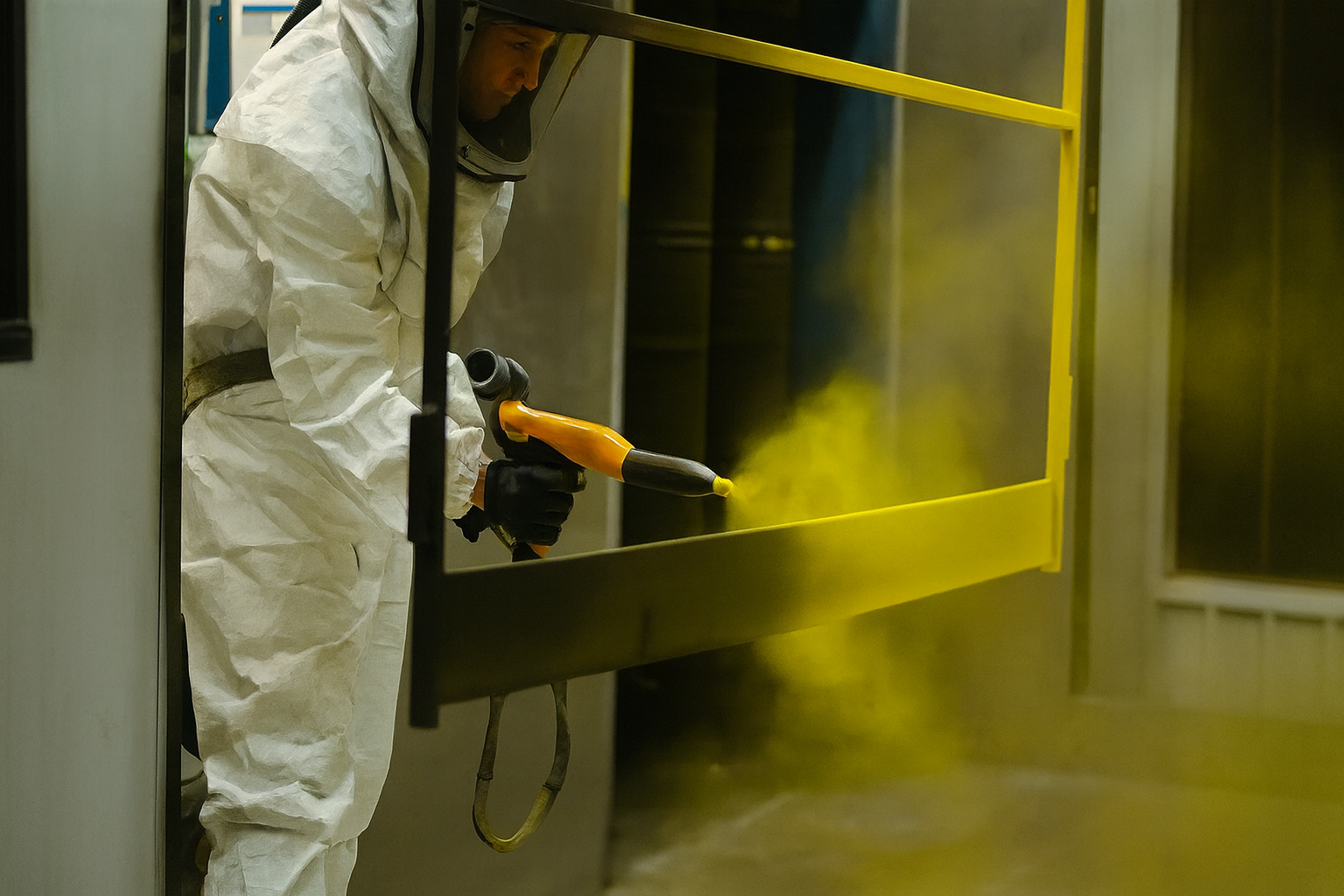 A powder-coated finish can deliver a consistent decorative surface and a protective layer over metal components, but the outcome depends directly on how the process is carried out. Surface preparation, powder selection, application technique, curing, and later exposure conditions all shape the final result more than the coating method alone.
What influences appearance and durability?
The quality of a finish is rarely about the powder itself; it reflects every step leading up to it. Several factors determine how consistent and stable the coating will look and perform over time.
- Surface preparation: cleaning, degreasing, and removing rust or scale before coating affects how well the powder adheres to the substrate.
- Powder selection: the type and grade of powder chosen influences color uniformity, texture, and resistance to the intended environment.
- Application method: even electrostatic distribution of the powder helps avoid thin spots or uneven buildup.
- Curing process: correct oven temperature and time allow the powder to fuse properly into a continuous protective layer.
- Exposure conditions: ongoing contact with moisture, chemicals, or abrasion affects how the finish holds up afterward.
Anyone comparing surface protection methods for steel structures may also find it useful to look at galvanizing vs powder coating to understand how each approach handles substrate protection differently.
When might powder coating be unsuitable?
Powder coating is not always the practical choice, and certain physical or structural limitations can rule it out before work even begins.
- Oven dimensions: parts larger than the curing oven cannot be coated as a single piece, which limits the size of structures that can go through the process.
- Heat-sensitive components: materials or attached parts that cannot withstand curing temperatures may be damaged during the process.
- Hard-to-reach areas: tight corners, enclosed cavities, or complex geometries can make even powder distribution difficult to achieve.
- Damaged or heavily corroded substrates: metal with significant pitting or corrosion may need extensive repair or replacement before coating is considered.
- Recoating old pieces: previously painted or coated items usually require full stripping and surface preparation before a new layer can be applied properly.
These limitations don’t rule out powder coating as an option, but they do mean that substrate condition and project scope should be assessed before deciding whether it fits a given application.
Recommended Services from EuroSys
EuroSys provides steel fabrication and metal surface treatment as part of an integrated service covering design, manufacturing, supply, and installation. With experience dating back to 2013, its projects include work for Aramco, the Royal Commission, and SABIC. Its services include electrostatic powder coating to help protect metals from rust and weather exposure. Contact the store to request a quote or technical consultation for your project.
Powder Coating for Metals
The powder coating for metals service is intended for iron and other metal parts. It includes surface preparation and electrostatic powder application, followed by quality checks of coating thickness and adhesion.
powder coating helps protect metals from rust and weather exposure while maintaining a uniform finish.
The service offers stable color options and is applied to metal parts supplied by the customer; it is not a packaged paint product sold separately.
- Service type: Electrostatic powder coating for metals.
- Stages: Surface preparation, coating application, and quality checks.
- Benefit: Protection against rust and weather exposure with a uniform finish.
Frequently asked questions about powder coating
Here are answers to common questions about powder coating.
Is powder coat expensive?
The cost of powder coating depends on factors such as the item’s size, condition, preparation needs, quantity, and specific coating requirements. Pricing varies from one piece to another based on these elements. Requesting an assessment for a specific item gives a clearer picture of the actual cost involved.
What is a powder coating finish?
A powder coating finish is a dry-applied powder that gets cured onto a prepared surface to form a continuous, even coating. This process creates a durable layer over the base material. The finish results from the powder bonding to the surface once it undergoes curing.
What is KV and UA in powder coating?
In powder coating, kV refers to the electrical potential of the spray equipment, measured in kilovolts, while µA refers to electrical current, measured in microamperes. Both values relate directly to the electrostatic application process used to charge the powder. These settings help control how the powder adheres to the surface being coated.
What are the steps to powder coating?
Powder coating involves preparing the surface, applying charged powder to it, and curing the powder using heat. After curing, the piece is cooled and then inspected to confirm the quality of the coating. Each step plays a role in achieving a consistent, durable finish.
Ready to Start Your Next Project?
Get a free consultation and a detailed quote from EuroSys for Metal Industries. We handle design, fabrication and installation, from concept to handover.
A reliable powder coating result begins with assessing the metal and preparing its surface properly, then moving through controlled application, curing, and final inspection. Each stage shapes how the coating performs and how it holds up over time. If you’re planning a metal project and want a technical assessment or a quote for your pieces, reach out to EuroSys.