

Choosing the right security gate is as much about matching it to the entrance as it is about the gate itself. A facility entrance gate should correspond to the type of entrance it protects: sliding or cantilever gates suit vehicle entrances that have side clearance, while swing or pedestrian gates work better where there’s appropriate operating space but limited lateral room. Before purchasing, it helps to check the gate material, opening width, movement clearance, expected traffic volume, access control integration, safety provisions, and ongoing maintenance requirements.
Ready to Start Your Next Project?
Get a free consultation and a detailed quote from EuroSys for Metal Industries. We handle design, fabrication and installation, from concept to handover.
A gate rarely stands on its own — it functions as part of the broader facility entrance, working alongside the adjoining fence and the routes used by both vehicles and pedestrians. Facility managers, engineers, security teams, and procurement staff comparing designs for industrial, commercial, or government sites need to weigh vehicle access gates against pedestrian gates and perimeter gates based on how each entrance is actually used. Getting this match right from the start reduces operational friction and keeps the site secure without slowing down daily movement.
Which security gate suits a facility?
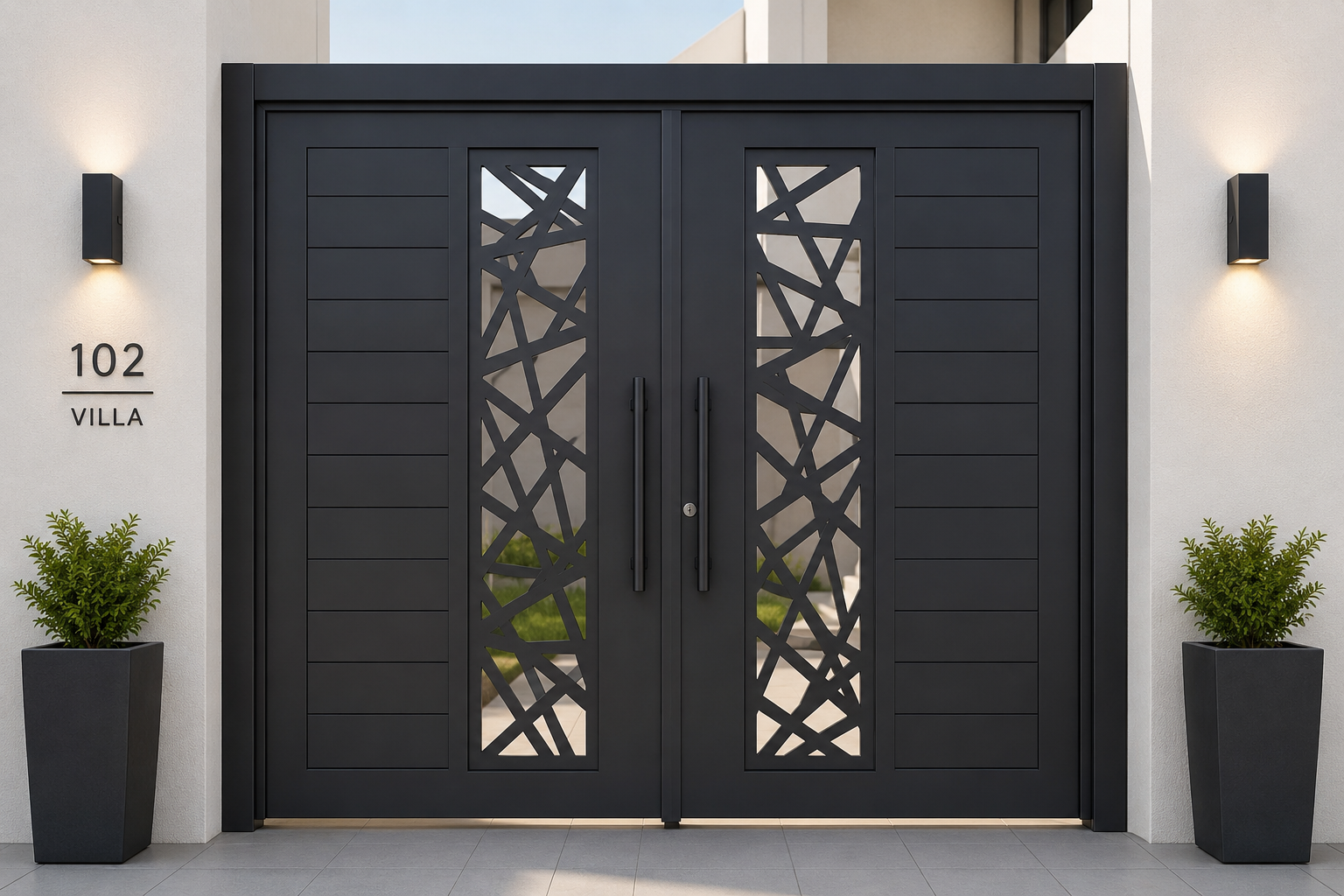 Choosing a gate comes down to movement type, available space, and how an entrance is actually used rather than treating one design as a universal fit. Matching the gate to the site layout determines whether traffic flows smoothly and whether the entrance performs reliably over time.
Sliding and cantilever gates for vehicle entrances
A sliding gate travels alongside the fence line instead of swinging into the entrance area, which makes it a practical choice where a swing arc would intrude on a roadway or parking space. This type does need sufficient side clearance along the fence to allow full travel.
There are two distinct sliding configurations worth separating:
- Ground-track sliding gate: this design depends on a track set into the ground, and its performance relies on that track staying clear and well maintained.
- Cantilever gate: this version does not run on a ground-level track at all, but it still requires space for the supporting structure that carries its weight as it slides.
Swing gates where opening clearance permits
A swing gate rotates on hinges, so it needs a clear arc of movement on the side it opens toward. Single-leaf or double-leaf configurations are selected based on the width of the opening and the layout around the vehicle entrance, with double-leaf designs generally used for wider openings where a single leaf would be impractical.
Pedestrian gates and separate walking routes
Separating a pedestrian entrance from the vehicle gate is appropriate wherever people and vehicles use the same perimeter opening but move at different paces and with different safety needs. A rising-arm barrier primarily regulates vehicle traffic flow rather than securing the perimeter, which makes it a different category from a gate designed to physically close an opening. Ordinary gates, in turn, are distinct from purpose-built vehicle-impact barriers, since the latter are engineered specifically to resist vehicle intrusion rather than simply control access.
Vertical gates and other space-constrained options
Where horizontal space along the fence line is limited, a vertical-opening design may be considered as an alternative to sliding or swing mechanisms. This option depends on site-specific engineering to confirm that the overhead clearance and supporting structure can accommodate the gate’s vertical travel safely.
Facility gate specifications to check before procurement
Before selecting a gate, buyers should confirm a defined set of specifications covering dimensions, materials, and operating method. This checklist helps match the gate configuration to the site’s actual traffic, exposure, and control requirements.
Opening dimensions and movement clearance
Measuring the site accurately before procurement avoids mismatched gate openings and clearance problems after installation. The gate opening width and height must reflect the vehicles and pedestrians that will actually pass through.
- Clear opening width and height: record the exact dimensions needed for the largest vehicle or equipment expected to pass.
- Vehicle types and turning paths: account for truck turning radius and any articulated vehicle movement near the gate.
- Pedestrian movement: separate pedestrian flow from vehicle paths where both share the same access point.
- Available side space: confirm enough clearance for the gate to swing or slide fully open.
- Ground conditions and drainage: check surface stability and water flow near the gate track or hinge points.
- Slope: note any incline that could affect gate operation or sealing at the base.
Metal construction and protective finish
The gate frame and infill should be specified for the site’s conditions rather than assumed. Material choice directly affects durability and maintenance needs over time.
- Frame material: steel, stainless steel, or aluminium, chosen according to the design brief and structural load.
- Infill type: matched to the facility’s security and visual requirements.
- Surface treatment: checked against the site’s exposure to weather, humidity, or chemical conditions.
- Maintenance plan: confirmed to align with the selected protective finish; buyers comparing coating options can review the difference between powder coating and liquid paint before specifying a system.
- Documented specifications: request written material and finish details instead of assuming a particular thickness or coating type.
Access controls and operating frequency
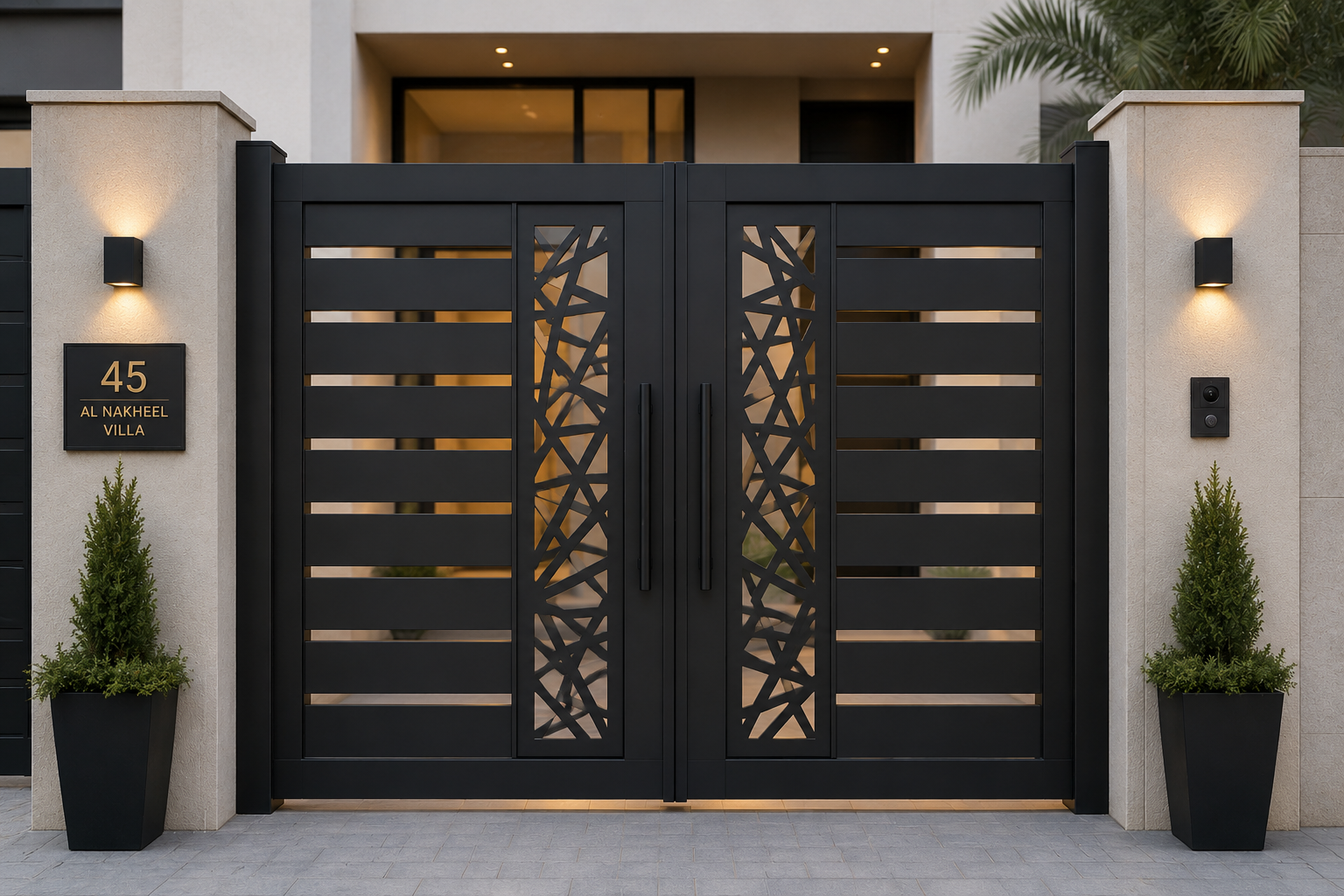 Operating method should match how often the gate will be used and who will manage it daily. This determines whether manual or powered operation, and which access control, suits the facility.
- Operation type: manual or powered, based on traffic frequency and available staffing.
- Access method: defined clearly if powered operation is required, such as card, keypad, or remote access.
- Power provision: confirmed as part of the project requirements for powered gates.
- Expected usage: documented to size the operating mechanism correctly.
- Maintenance access: planned in advance for powered components.
- Connection to adjoining fence: reviewed to ensure the gate closes the opening fully and consistently.
- Security requirement match: confirmed against the facility’s actual needs, without describing decorative infill as intrusion-resistant or impact-rated without project-specific evidence.
What metalwork supports a custom facility gate?
A custom gate relies on precisely fabricated metal components, and laser cutting is the process that shapes those parts before assembly. This service covers the cutting and patterning work behind gate frames, panels, and decorative elements — it does not constitute a complete gate, an automated operator, or a certified barrier system.
Laser Cutting Services for Metal
Custom laser cutting is available for iron, stainless steel, and aluminium sheets and plates, giving project teams flexibility in material choice for gate-related components. Architectural patterns for decorative panels or screens can be prepared using specialized design software before being cut with laser equipment. To understand how this process works in practice, it helps to reviewWhat is laser cutting .
A customer-provided design can serve as the basis for a custom cutting request, whether the components are intended for industrial installations or architectural detailing.
When requesting a quotation for gate components or decorative panels, buyers should prepare the following:
- Drawing: a clear technical drawing or design file showing the required pattern or shape.
- Material: the specific metal type needed — iron, stainless steel, or aluminium.
- Dimensions: exact sheet or plate measurements for the components in question.
- Intended application: the purpose of the cut pieces, such as gate panels, frames, or architectural accents.
How do site conditions affect gate selection?
Site conditions determine which gate design will actually function at an entrance, since available space, traffic flow, and structural requirements vary from one site to another. Working through the selection in clear steps helps avoid mismatches between the gate chosen and the entrance it serves.
Map vehicle and pedestrian movements
The starting point is defining the entrance’s purpose: controlled vehicle access, pedestrian access, or both combined.
- Traffic documentation: Record how vehicles and pedestrians actually move through the entrance during daily operation.
- Route separation: Where vehicle and pedestrian paths would otherwise conflict, consider separate routes to keep each movement type clear of the other.
Match gate movement to available space
Before settling on a sliding, cantilever, swing, or vertical gate, check the actual movement envelope on site.
- Gate clearance: Confirm the full swing or slide path is unobstructed, factoring in surrounding fencing and any fixed obstacles.
- Ground conditions: Account for slopes and drainage that could affect how a gate travels or seats when closed.
- Service access: Leave enough room to reach and maintain the moving parts of the gate over time.
Define fabrication and installation requirements
Once the entrance layout and gate clearance are confirmed, a project brief should cover the remaining technical details.
- Dimensions and metalwork: Specify the exact measurements and proposed structural components for the gate.
- Finish and operation: Define the surface finish and the operating method, whether manual or automated.
- Access-control interface: Note any integration needed with an access-control system, where applicable.
- Installation conditions: Document the site conditions the installation team will work with, along with each contractor’s responsibilities.
Custom-cut panels can be one component within a wider gate design, but they do not replace the structural and operational specification covered in the fabrication drawings and installation brief. A thorough site survey, paired with a clear entrance layout, keeps the selection process grounded in what the site can actually support.
Safe operation and maintenance of facility gates (practical checks)
Running a gate safely depends on more than installing the hardware itself — it requires ongoing checks on moving parts, controls, and finishes. Facility teams should treat safe operation as a continuous process that starts at design stage and carries through daily use.
Moving-gate hazards and protective measures
For any powered gate, the project team should assess every point where moving parts could trap or strike a person. This includes the zones beside posts, fences, and along the gate’s full travel path.
Protective measures need to match the actual layout and equipment installed on site, not a generic assumption.
- Sensor limitation: a single sensor should never be treated as sufficient to cover every possible hazard point.
- Site-specific review: each gate type and layout calls for its own hazard assessment rather than a one-size-fits-all approach.
Inspection and upkeep after installation
Pedestrian movement should be planned separately from the vehicle gate’s path, so people are never required to cross into the gate’s movement zone to reach an entrance.
Facility teams should also set clear operating instructions paired with a scheduled inspection plan covering several elements:
- Moving hardware: hinges, rollers, and drive components should be checked regularly for wear or obstruction.
- Tracks where fitted: any track system needs periodic clearing and alignment checks.
- Controls: switches, sensors, and access controls should be tested to confirm they respond as expected.
- Protective finish: the condition of the coating should be monitored, since deterioration can expose metal to corrosion over time.
Safety guidance of this kind applies to design and procurement decisions. A fabrication service that supplies gate structures does not, on its own, provide automation, safety devices, or a fully compliant installed gate — those elements depend on the complete system selected and maintained for the site.
Recommended Products from Eurosys
Eurosys offers comprehensive, end-to-end solutions—from design and manufacturing to supply and installation. Supported by a production facility equipped for cutting, welding, forming, and assembly, the company is an approved supplier for major entities, including Aramco, the Red Sea Project, the Royal Commission, and SABIC. A key offering is their laser-cutting service, tailored for industrial and architectural projects within the Kingdom of Saudi Arabia. To request a price quote or technical consultation for your project requirements, please contact their team.
Laser-Cutting Services for Iron and Metals
This service provides custom cutting for iron, stainless steel, and aluminum sheets and plates. It offers the precision required for complex shapes and bespoke patterns—ideal for architectural applications such as security gates, facades, fencing, and lighting poles.
The process consists of two main stages:
Design: Architectural patterns are developed using specialized software, ensuring precise measurements and intricate detailing.
Manufacturing: The design is cut from the metal using laser technology, delivering accurate and consistent results.
This service is well-suited for industrial and architectural projects that require custom metal components or decorative panels. Clients may also provide their own designs for bespoke cutting requests. Available materials include iron, stainless steel, and aluminum. You can explore further details regarding their laser-cutting services to learn more.
Frequently asked questions about security gates
Here are direct answers to common questions about security gates.
What is a security gate?
A security gate is a controlled entrance barrier used to manage access through a facility’s perimeter. It typically regulates the movement of vehicles or pedestrians at a defined entry point, allowing authorized passage while restricting others.
How to make a security gate?
Making a gate starts with a site survey and a clear design brief covering the required dimensions and function. The frame and materials are then specified, followed by fabrication and finishing of the components. The final step is installing the gate and checking it against its intended operation.
What is a security gate called?
Its name usually reflects its design and purpose. Common examples include a sliding gate, cantilever gate, swing gate, pedestrian access gate, and vehicle entrance gate.
What is a security gate pass?
A gate pass is an access credential or authorization used at a controlled entrance. It is not the physical gate itself, but rather the permission document or card that allows entry through it.
Ready to Start Your Next Project?
Get a free consultation and a detailed quote from EuroSys for Metal Industries. We handle design, fabrication and installation, from concept to handover.
Choosing the right security gate comes down to matching its movement, construction, controls, and upkeep to your entrance and the people using it daily,