

Anyone asking what governs structural steel welding standards needs one clear answer: AWS D1.1, the structural welding code for steel, sets the requirements for welded connections, welding procedure and welder qualification, fabrication, inspection, and weld acceptance within its scope. Projects still need to confirm the applicable edition and any additional requirements stated in the contract documents, since these details determine exactly how the code applies to a given job.
Ready to Start Your Next Project?
Get a free consultation and a detailed quote from EuroSys for Metal Industries. We handle design, fabrication and installation, from concept to handover.
Engineers, fabricators, inspectors, contractors, and project owners all rely on this structural welding code to identify governing requirements and the records needed to demonstrate compliance. Understanding weld inspection requirements and maintaining AWS D1.1 compliance throughout design, fabrication, and execution protects structural integrity and keeps every party aligned on what qualifies as acceptable work. The sections ahead outline how these requirements apply in practice.
What Does AWS D1.1 Cover?
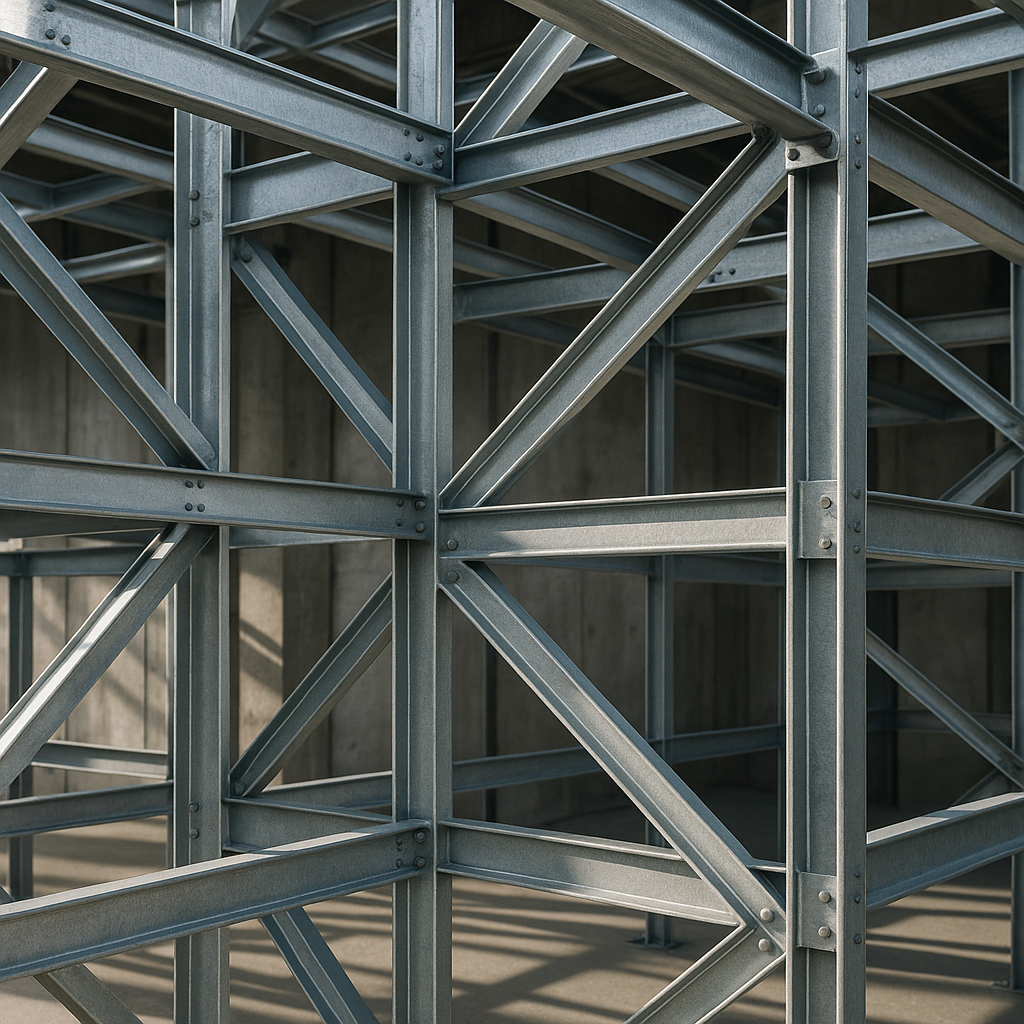 AWS D1.1 sets the structural steel welding standards governing how carbon and low-alloy steel members are joined, inspected, and accepted. Before applying its clauses, the first step is confirming whether a given connection actually falls within the code’s scope.
Steel and welded work within scope
AWS D1.1 addresses structural welding of applicable carbon and low-alloy steels used in load-bearing construction. It applies to structural steel connections found in buildings, bridges, and similar fabricated steelwork, but not every welded steel item automatically qualifies. Determining whether a connection sits within the welding code scope is a necessary step before any procedure, qualification, or inspection requirement under the code can be enforced.
Requirements beyond weld inspection
The code reaches well past checking finished welds — it governs the full lifecycle of a structural connection, including:
- Connection design: welded joint configurations must be engineered to carry the loads they’re intended for.
- Prequalified welding procedures: certain joint, process, and material combinations are pre-approved without additional testing.
- Procedure and welder qualification: both the welding procedure and the welder performing it must be qualified to produce sound, code-compliant joints.
- Fabrication: covers how steel members are cut, fit, and assembled before and during welding, a process reflected in projects such as steel structure building construction.
- Inspection and weld acceptance: defines the criteria used to judge whether a completed weld meets code requirements.
- Stud welding: addresses shear studs and similar fasteners welded to structural members.
- Tubular structures: sets additional provisions for hollow structural sections, which behave differently than open shapes under welding stress.
- Work on existing structures: applies when repairs, modifications, or additions are made to steel that’s already in service.
It’s worth distinguishing structural connections from architectural or decorative metalwork. A welded decorative panel or ornamental railing is not automatically a structural member, and producing one doesn’t make it an AWS D1.1-compliant product unless it’s actually carrying structural load and meets the code’s design and qualification requirements.
Which Welding Standard Edition Governs Your Project?
The correct answer to “which structural steel welding standards edition applies” is whatever edition the contract documents name — not simply the most recent release available. Confirming this before fabrication begins prevents disputes over acceptance criteria later in the project.
Contract documents and governing specifications
The governing edition is identified by checking the contract, the approved drawings, the project specifications, and any requirements from the authority having jurisdiction. AWS D1.1/D1.1M:2025-AMD1 is currently available, but a given project may still call for an earlier edition on purpose.
- Contract wording: Look for the exact edition year and amendment status named in the welding or structural steel section.
- Approved drawings: Drawings sometimes reference a specific edition even if the written specification is silent on it.
- Authority requirements: Local or national jurisdictions may mandate a particular edition regardless of what the latest publication offers.
Substituting a newer edition because it exists, rather than because it was specified, is not a safe assumption. Each edition can carry differences in qualification, procedure, or acceptance language that affect how welds are judged.
How complementary structural requirements fit
AWS D1.1 governs weld examination and acceptance, but it does not replace the structural design specification or cover every inspection requirement a project may need. Where specified, AISC 360 Chapter N establishes structural steel inspection obligations that work alongside AWS D1.1’s weld-focused provisions rather than duplicating them.
Seismic-specific requirements, such as AISC 341 or AWS D1.8, apply when required by the applicable building regulations or project documents. These documents address seismic detailing and welding demands that AWS D1.1 does not cover on its own, and they should never be treated as interchangeable substitutes for it — each serves a distinct, non-overlapping purpose within the same project’s documentation.
How Are Welding Procedures and Welders Qualified?
Qualification under structural steel welding standards works on two separate tracks: confirming that a welding procedure is sound, and confirming that the person running the torch or electrode can execute it correctly. Both checks are required before fabrication starts, and neither one substitutes for the other.
Prequalified versus tested welding procedures
A welding procedure specification (WPS) can either meet all the prequalification conditions set out in the governing code edition, or it can require qualification testing before use. Determining which path applies means checking the base metal, filler metal, welding process, joint configuration, and any other limits listed against the current edition of the standard. A prequalified welding procedure skips the testing step because the combination of variables has already been proven acceptable, while a procedure outside those limits must be qualified through actual test welds and mechanical testing before it can be used on a project.
Welder qualification for the assigned work
Procedure qualification and welder qualification answer two different questions. Procedure qualification establishes that a given WPS produces sound welds under defined conditions, while welder qualification establishes that a specific individual can perform welds correctly within a defined qualification range — covering position, process, thickness, and other variables tied to the assigned work. A qualified WPS does not make an unqualified welder capable of using it, and a qualified welder cannot substitute for an unverified procedure.
Records to verify before fabrication
Before welding begins, several documents need to be checked and confirmed, though not every project follows the identical sequence of tests or paperwork:
- WPS: the written specification covering process, materials, and parameters for the joint being welded.
- Procedure qualification record: supporting test data for any WPS that required qualification testing rather than qualifying through prequalification.
- Welder qualification records: documentation showing each welder is qualified for the specific process, position, and material range assigned.
- Approved drawings: fabrication and erection drawings showing joint details, weld sizes, and locations consistent with the qualified procedures.
- Project-specific requirements: any additional conditions set by the contract or specification that apply beyond the base code requirements.
How Is Structural Steel Welding Inspected?
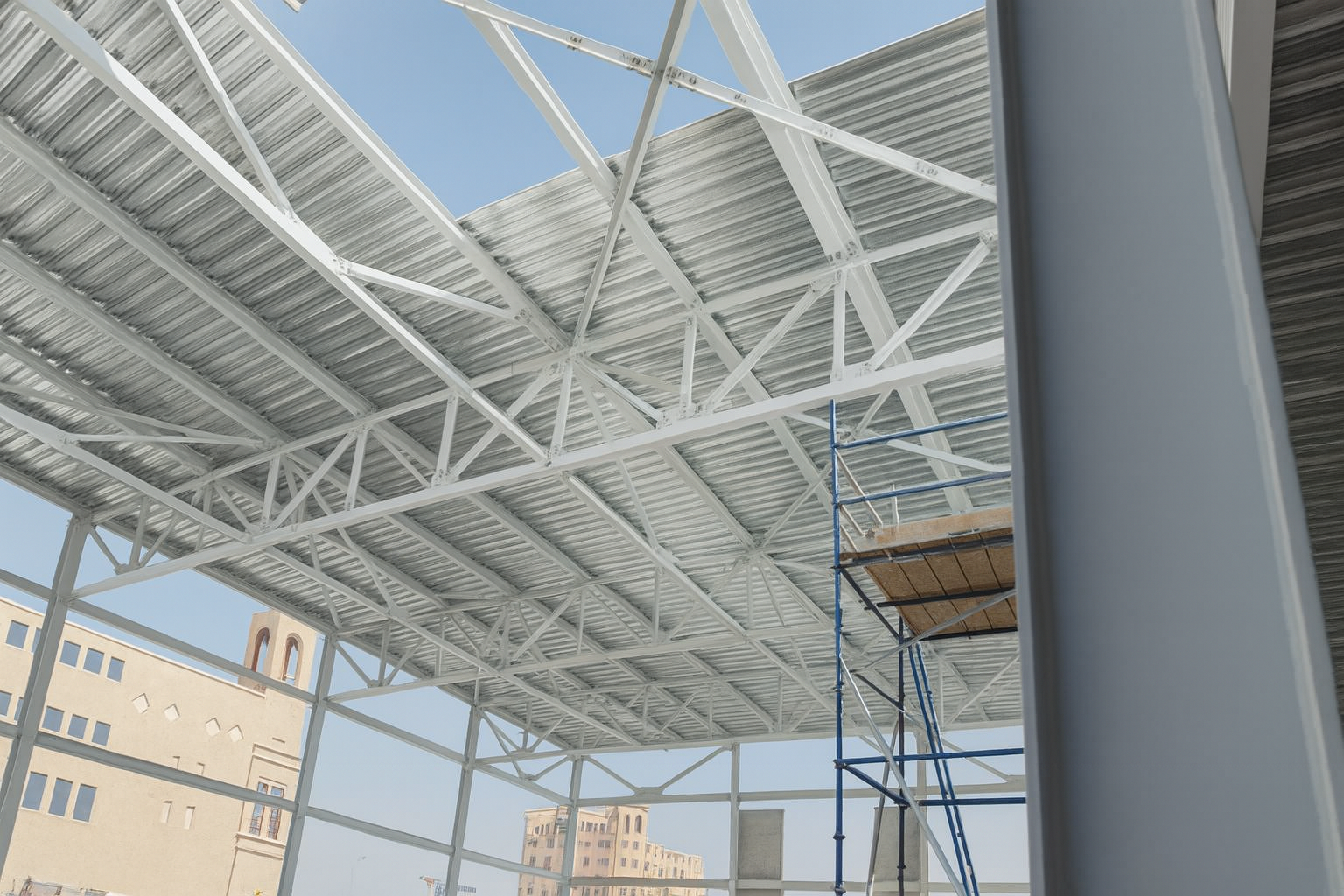 Structural steel welding inspection follows a sequence that confirms materials, procedures, and finished joints all meet the governing structural steel welding standards. The exact hold points vary by project, but the logic stays consistent from setup through final documentation.
Checks before and during welding:
- Material and joint identification: Confirming that base metals, filler materials, and joint configurations match the approved drawings before any arc is struck.
- WPS and welder qualification: Verifying that the welding procedure specification is approved for the joint type and that the welder holds current qualification for that process and position.
- Fit-up and fabrication checks: Reviewing root opening, alignment, cleanliness, and joint preparation prior to welding to catch issues before they become embedded in the weld.
- In-process monitoring: Observing parameters such as preheat, interpass temperature, and electrode handling where the project calls for it.
- Examination of completed welds: Checking finished welds against size, profile, and soundness criteria once welding is complete.
- Recording results: Logging findings at each hold point so the inspection trail matches what the project documentation requires.
Visual examination is the first and most consistent layer of inspection. It evaluates accessible characteristics of the weld and surrounding fabrication — profile, size, undercut, porosity, and similar surface-level traits — against the acceptance criteria that apply to that joint. Beyond this, additional nondestructive testing may be called for depending on the connection type, the kind of discontinuities anticipated, and what the approved inspection plan or governing contract documents specify. Not every weld is tested the same way; the method is matched to the risk and function of that particular joint, which is one reason broader guidance on Safety Standards for Metal Structures helps frame how inspection fits into overall structural safety.
It helps to separate two layers of rules here. The applicable code sets the examination methods and acceptance criteria — what defines a sound weld and how it should be checked. Project-specific requirements, on the other hand, determine who performs the inspection, at which stages it takes place, and what reports or records must be submitted to the client or authority having jurisdiction. An inspector plays a defined role in verifying compliance at each stage, though the exact credential expected of that inspector can differ from one project to another rather than following a single fixed requirement everywhere.
Weld Acceptance and Repair Decisions
Deciding whether a weld passes or fails is a structured process, not a snap judgment. It follows structural steel welding standards step by step, moving from identifying the right acceptance criteria to recording findings and acting on them.
- Identify the applicable edition: confirm which edition of the acceptance criteria governs the project, since requirements can shift between revisions.
- Assess the discontinuity: use the examination method required for that weld type and location to evaluate what has actually been found.
- Record the finding: document the observation clearly so it can be reviewed against the approved acceptance criteria.
- Follow the disposition path: when a weld is rejected, proceed through the approved repair or disposition process rather than improvising a fix.
Not every imperfection spotted during examination means the weld has failed. An observed discontinuity is simply something detected — a rejectable defect is one that exceeds the acceptance criteria defined for that specific weld, method, and application. Limits are not universal; what is acceptable on one joint under one examination method may not apply the same way elsewhere, so each case is judged against its own governing criteria rather than a single fixed number.
Once a repair has been carried out, the work does not end there. The affected area must be re-examined according to the approved procedure and the project’s documentation requirements, confirming that the repair itself meets the same acceptance criteria applied to the original weld.
Recommended Products from European Systems
Welding standards for structural steel are critical to the safety of load-bearing structures; this same engineering precision is applied to decorative metalwork. European Systems integrates this approach across its product range—offering design, manufacturing, supply, and installation—with a proven track record of delivering projects for major Saudi Arabian entities. Their decorative panel work reflects a commitment to precision and durable finishes. Contact their team to request a quote or a technical consultation to discuss your project requirements.
Laser-Cut Facades and Decorative Panels
European Systems designs, manufactures, and installs decorative metal panels for lighting columns, fencing, facades, gates, and shading canopies, combining intricate detail with a robust aesthetic.
The process begins with specialized design software to create precise decorative patterns, followed by laser-cutting steel, stainless steel, or aluminum sheets to ensure consistent results and clean, sharp edges.
The finishing stage includes epoxy or electrostatic powder coating for weather resistance, while installation utilizes concealed mounting systems that provide the panels with a clean, seamless appearance.
Design: Custom decorative patterns created using specialized software.
Manufacturing: Laser-cutting of steel, stainless steel, and aluminum sheets. Coating: Epoxy or electrostatic powder coating for long-lasting protection.
Installation: Concealed mounting systems for a refined architectural appearance.
These panels are well-suited for architectural facades, perimeter walls, gates, and lighting columns—applications where both functionality and aesthetics are equally important. European systems apply the same manufacturing precision to every metal structure they produce.
Frequently Asked Questions About Structural Steel Welding
The following answers address common questions about structural steel welding standards.
What is ISO 9606-1 standard?
ISO 9606-1 specifies qualification testing for welders performing fusion welding of steels. It confirms an individual welder’s competence for defined welding positions, processes, and material groups. Its use on a project does not, by itself, replace the applicable AWS D1.1 or contract requirements. Project compliance still depends on the specific code and contract provisions in force.
Does AWS D1.1 require every weld to undergo nondestructive testing?
No. The required examination methods and extent depend on the applicable code provisions and project inspection requirements. Not every weld is subject to the same level or type of testing under this standard.
Is the latest AWS D1.1 edition always required?
No. Projects must use the edition adopted by the governing contract documents and applicable requirements, even when a newer edition exists. The contract and project specifications determine which edition applies, regardless of later updates.
Ready to Start Your Next Project?
Get a free consultation and a detailed quote from EuroSys for Metal Industries. We handle design, fabrication and installation, from concept to handover.
Meeting structural steel welding standards comes down to confirming the governing code edition and its scope, verifying that procedures and welders carry proper qualification, and checking inspection records against the acceptance criteria set for the project. These steps give you a clear, verifiable basis for judging weld quality on any structural steel scope.
Read also