

Road markings are a fundamental part of traffic safety infrastructure. They communicate lane boundaries, turning instructions, overtaking restrictions, pedestrian routes, stopping points, and potential hazards directly to road users. For these markings to perform correctly, their materials, dimensions, colours, visibility, application, and inspection must follow approved technical requirements.
Ready to Start Your Next Project?
Get a free consultation and a detailed quote from EuroSys for Metal Industries. We handle design, fabrication and installation, from concept to handover.
Understanding road marking specifications Saudi road projects apply is therefore essential for contractors, consultants, developers, and government entities. Compliance involves more than choosing road paint. It requires following the approved drawings, contract specifications, Saudi Roads Code, applicable authority requirements, material approvals, traffic-control plans, and quality-testing procedures.
EuroSys provides professional road marking services in Saudi Arabia for highways, parking facilities, industrial zones, commercial developments, and infrastructure projects.
Who Regulates Road Marking Specifications in Saudi Arabia?
Road marking requirements may be governed by different authorities depending on the ownership, classification, and location of the road.
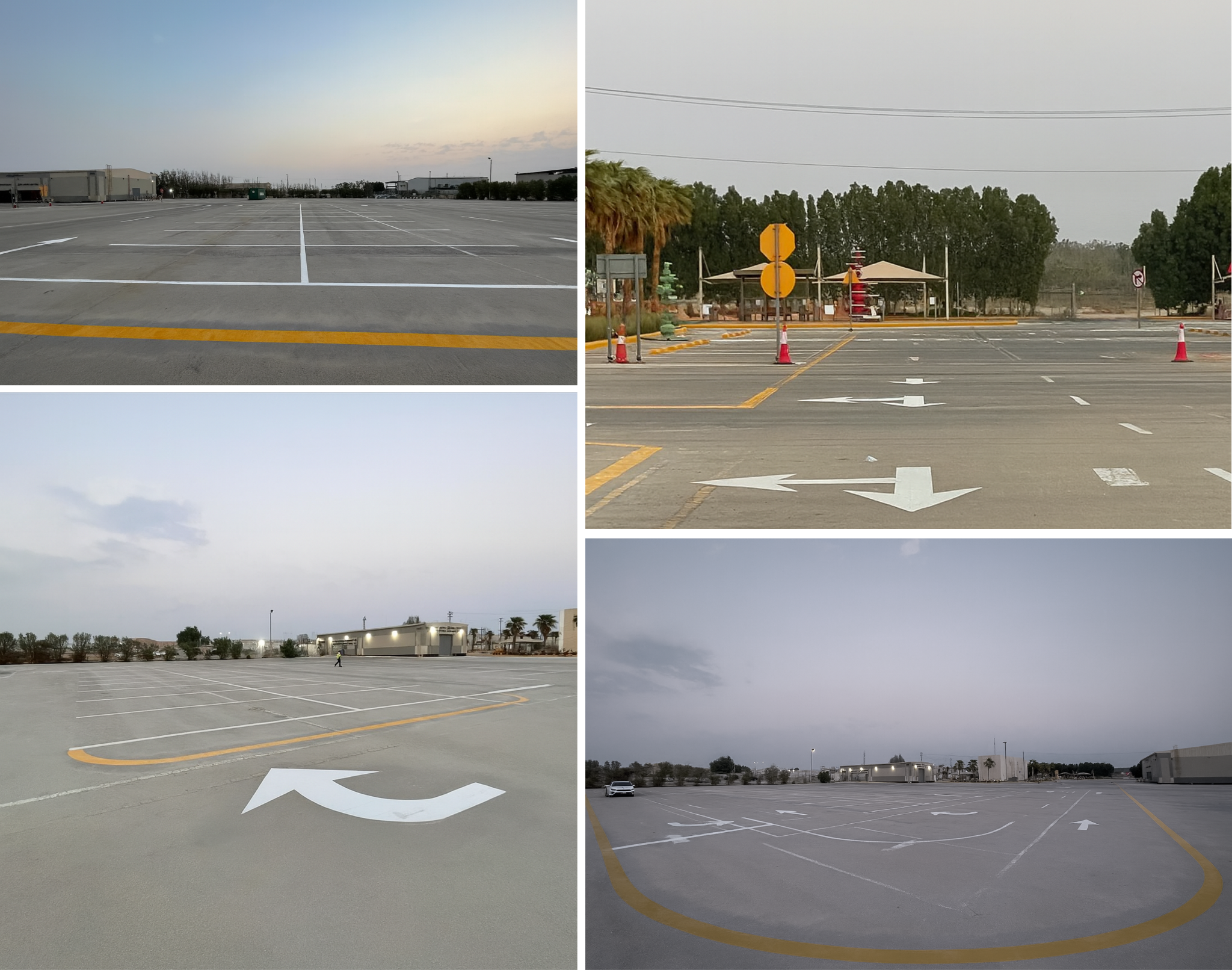
Relevant parties can include:
- Ministry of Transport and Logistic Services
- Roads General Authority
- Ministry of Municipalities and Housing
- Local municipalities and regional authorities
- Royal commissions and development authorities
- Government project owners
- Industrial-city authorities
- Project consultants
- Private developers and facility operators
The Roads General Authority is responsible for regulating and developing the road sector at the national level, while the Ministry of Transport and Logistic Services oversees the broader transport and logistics system.
Municipal roads, private developments, industrial facilities, airports, ports, and special economic zones may also have separate or additional project requirements.
For this reason, Ministry of Transport compliance should not be treated as one generic paint specification. The contractor must identify the authority responsible for the project and work from the latest approved documents.
What Are Road Marking Specifications?
Road marking specifications define the materials, dimensions, colours, patterns, performance characteristics, and application procedures required for a project.
A complete specification may cover:
- Type of marking material
- Approved material manufacturer
- Colour requirements
- Line width
- Line thickness
- Solid and broken-line patterns
- Reflectivity requirements
- Glass bead application
- Skid resistance
- Drying or cooling time
- Surface preparation
- Application equipment
- Environmental conditions
- Inspection and testing
- Acceptance criteria
- Maintenance responsibilities
- Removal of defective markings
The applicable values can vary according to road class, design speed, traffic volume, pavement type, location, and project specifications.
Compliance Hierarchy for Saudi Road Marking Projects
Before work begins, the contractor should establish which documents control the project. A typical compliance hierarchy may include:
- Applicable Saudi laws and regulations
- Requirements issued by the responsible road authority
- Saudi Roads Code provisions
- Approved project specifications
- Issued-for-construction drawings
- Approved material submittals
- Approved method statement
- Manufacturer’s application instructions
- Inspection and testing plan
- Instructions issued by the project consultant
If two requirements appear to conflict, the contractor should obtain written clarification from the consultant or project owner rather than choosing the easier requirement.
This documentation process is an important part of road marking specifications Saudi compliance.
Types of Road Marking Materials
Material selection depends on the road environment, traffic level, required durability, pavement condition, and contract requirements.
Thermoplastic Road Marking
Thermoplastic material is heated before application and forms a solid marking layer as it cools. It is commonly considered for permanent road markings and areas exposed to frequent traffic.
Potential applications include:
- Highways
- Main roads
- Intersections
- Pedestrian crossings
- Directional arrows
- Stop lines
- Industrial access roads
- Busy parking entrances
- High-traffic circulation lanes
Thermoplastic performance depends on correct heating, application thickness, surface preparation, glass bead distribution, and compatibility with the pavement.
Cold Paint Road Marking
Cold-applied paint can be used for permanent, temporary, maintenance, parking, and industrial applications, depending on the product and project specifications.
It may be suitable for:
- Parking areas
- Internal roads
- Industrial yards
- Low- or moderate-traffic facilities
- Temporary traffic arrangements
- Warehouses
- Maintenance remarking
- Private developments
Cold paint generally offers a simpler application process, but it may require more frequent renewal in heavily trafficked areas.
Other Marking Systems
Depending on the project, specifications may permit or require additional systems such as:
- Two-component cold plastic
- Preformed thermoplastic
- Temporary removable marking tape
- Raised pavement markers
- Profiled or structured markings
- Specialized high-friction systems
The contractor must not substitute one material for another without formal approval.
Road Marking Colours and Their Functions
Colours communicate specific instructions and must be applied consistently with the approved traffic design.
Common road marking colours may include:
White Markings
White is commonly used for:
- Lane separation
- Edge lines
- Directional arrows
- Stop lines
- Pedestrian crossings
- Road legends
- Parking spaces
- Traffic islands and hatched areas
Yellow Markings
Yellow may be used to indicate:
- Opposing traffic separation
- Road restrictions
- No-parking areas
- Kerb restrictions
- Median-side boundaries
- Special project-defined warnings
The precise meaning and use of each colour must follow the approved drawings and applicable authority requirements. Contractors should not rely solely on common practice when the project documents specify a particular colour system.
Solid and Broken Road Lines
The pattern of a road line determines the instruction it gives to drivers.
Solid Lines
Solid lines are used where crossing or lane changing is restricted or discouraged. They may appear:
- Along road edges
- Near intersections
- Around traffic islands
- At merging or diverging areas
- In zones with limited visibility
- Between opposing traffic movements
- Near pedestrian facilities
Broken Lines
Broken lines generally separate traffic lanes where movement between lanes is permitted, subject to traffic conditions and other restrictions.
Their design may specify:
- Line-segment length
- Gap length
- Line width
- Pattern sequence
- Starting and ending locations
A marking can have the correct material but still fail inspection if its line-and-gap pattern does not match the approved drawings.
Road Marking Width and Thickness
Line width and material thickness influence visibility, durability, material consumption, and compliance.
Specifications may establish different dimensions for:
- Standard lane lines
- Edge lines
- Centre lines
- Warning lines
- Stop lines
- Pedestrian crossings
- Bus lanes
- Cycle lanes
- Gore and chevron markings
- Directional arrows
- Road text and symbols
High-visibility markings such as stop lines and crossings may be wider than ordinary lane-separation lines. However, the contractor must use the dimensions stated in the issued-for-construction drawings and approved specifications.
Thermoplastic thickness must also be controlled during application. A layer that is too thin may wear prematurely, while an excessively thick or uneven layer can affect finish, consumption, and acceptance.
Retroreflectivity and Night-Time Visibility
Road markings must remain visible in both daytime and night-time conditions. At night, retroreflective glass beads return light from vehicle headlights toward the driver, helping the marking remain visible.
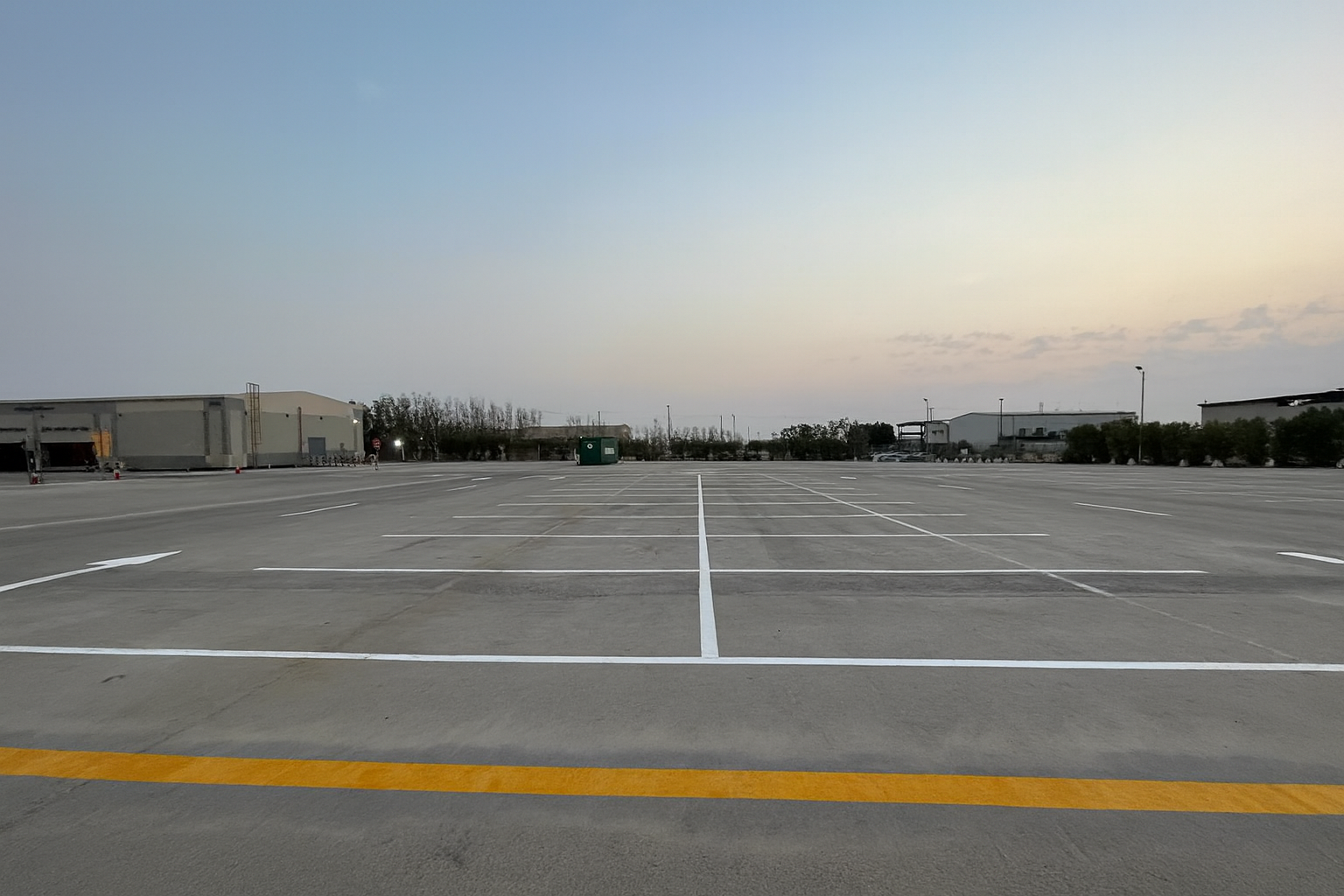
The road marking specification may define:
- Type and grading of glass beads
- Application rate
- Drop-on or intermix requirements
- Initial retroreflectivity
- Maintained retroreflectivity
- Testing method
- Inspection frequency
- Minimum acceptance value
Glass beads must be distributed evenly and embedded to an appropriate level. Insufficient bead application can reduce night visibility, while excessive or poorly embedded beads may not produce the required performance.
Retroreflectivity requirements should always be taken from the project’s current technical specification.
Skid Resistance Requirements
Road markings should provide visual guidance without creating an unacceptable slipping or skidding risk.
Skid resistance is especially important for:
- Pedestrian crossings
- Stop lines
- Arrows and large symbols
- Motorcycle routes
- Curves
- Ramps
- Intersections
- Areas exposed to braking or turning
The material system, surface texture, aggregate content, application method, and finished thickness may all influence skid resistance.
Where the contract requires testing, the contractor must use the specified test method and submit the results for approval.
Road Surface Preparation Requirements
Surface preparation is one of the most important requirements in road marking work. Even an approved material can fail if applied to a dirty, damp, oily, or unstable surface.
The preparation process may include:
- Inspecting the pavement condition.
- Confirming that paving work has been accepted.
- Removing dust, sand, soil, and loose particles.
- Cleaning fuel, oil, grease, or other contamination.
- Removing loose or incompatible old markings.
- Confirming surface dryness.
- Checking pavement and ambient conditions.
- Setting out the approved marking locations.
- Applying primer where specified.
- Protecting the prepared area until application begins.
EuroSys includes cleaning and surface preparation as the first stage of its published road marking implementation process.
Road Marking Setting-Out Requirements
Setting out transfers the approved traffic drawings to the road surface. Small measurement errors can result in misaligned lanes, incorrect gaps, uneven arrows, or inadequate clearances.
The contractor should verify:
- Road centreline and control points
- Lane widths
- Shoulder widths
- Start and end chainages
- Line and gap patterns
- Transition lengths
- Arrow positions
- Stop-line locations
- Crossing dimensions
- Gore and chevron layouts
- Text and symbol orientation
Temporary guide marks should be clear enough for application crews but should not remain visible after the permanent markings are complete.
Thermoplastic Application Requirements
Thermoplastic application should follow the approved material data sheet, method statement, and project specification.
Important controls include:
- Material approval and batch identification
- Storage conditions
- Heating temperature
- Application temperature
- Surface temperature and moisture
- Primer use where required
- Line width and thickness
- Glass bead application rate
- Equipment calibration
- Traffic protection
- Cooling and reopening time
Overheating can damage the material, while inadequate heating may prevent proper flow or bonding. Application records should therefore document relevant temperatures and batch information.
EuroSys has delivered thermoplastic marking works for road, industrial, and infrastructure projects, as shown in its road marking project portfolio.
Cold Paint Application Requirements
Cold paint application also requires controlled conditions and approved procedures.
The contractor should verify:
- Product type and approval status
- Mixing requirements
- Thinning restrictions
- Application rate
- Wet- and dry-film thickness
- Surface cleanliness
- Weather and temperature conditions
- Drying time
- Glass bead compatibility
- Equipment calibration
- Reopening time
Adding unapproved thinner or applying the material at an incorrect rate can reduce opacity, thickness, adhesion, and service life.
Road Marking Application Equipment
Professional equipment helps the contractor control line width, thickness, material flow, and bead distribution.
Depending on the project, equipment may include:
- Self-propelled road marking machines
- Truck-mounted striping equipment
- Hand-guided application machines
- Thermoplastic boilers and preheaters
- Spray equipment
- Extrusion or screed equipment
- Glass bead dispensers
- Surface-cleaning machinery
- Layout and measuring equipment
- Retroreflectivity testing devices
- Wet- and dry-film thickness gauges
All equipment should be suitable for the approved material and maintained in good working condition.
Traffic Management During Road Marking Work
Road marking operations often take place beside or within live traffic. An approved traffic-management plan is therefore essential.
The plan may include:
- Advance warning signs
- Cones and barriers
- Lane closures
- Tapers and transition zones
- Flag personnel
- Vehicle-mounted warning devices
- Safe worker access
- Night-work lighting
- Emergency arrangements
- Temporary speed controls
- Protection of freshly applied markings
Public safety is identified as a core stage in EuroSys’s road marking implementation process.
Traffic control should remain in place until the markings have dried, cooled, or cured sufficiently to carry traffic without damage.
Temporary Road Markings
Temporary markings may be necessary during:
- Road construction
- Diversions
- Maintenance projects
- Lane shifts
- Utility works
- Phased construction
- Emergency repairs
Temporary markings must be visible and unambiguous. Old or conflicting markings should be removed or covered using an approved method.
Leaving both temporary and permanent layouts visible can confuse drivers, especially at night or in dusty conditions.
The contractor should also ensure that temporary marking removal does not cause excessive pavement damage or leave misleading marks.
Quality Control and Inspection
A compliant road marking project requires documented inspections before, during, and after application.
Pre-Application Inspection
The contractor and consultant may inspect:
- Approved drawings
- Material certificates
- Batch numbers
- Storage conditions
- Surface cleanliness
- Weather conditions
- Equipment calibration
- Setting-out points
- Traffic-management arrangements
Application Inspection
During installation, inspections may cover:
- Material temperature
- Line width
- Layer thickness
- Glass bead distribution
- Pattern dimensions
- Application rate
- Alignment
- Drying or cooling
- Site safety
Final Inspection
After completion, the finished markings may be evaluated for:
- Position
- Dimensions
- Alignment
- Colour
- Opacity
- Uniformity
- Edge definition
- Thickness
- Retroreflectivity
- Skid resistance
- Adhesion
- Damage or contamination
- Compliance with approved drawings
Non-compliant areas may need to be removed and reapplied.
Documents Required for Compliance
Road marking contractors may be required to submit a technical package containing:
- Material data sheets
- Product certificates
- Manufacturer approvals
- Safety data sheets
- Samples and colour information
- Method statement
- Inspection and test plan
- Equipment details
- Calibration certificates
- Traffic-management plan
- Risk assessment
- Workforce competency records
- Trial-area results
- Daily application reports
- Quality-test reports
- As-built information
- Warranty documentation
The exact submission requirements vary between projects.
Material Storage and Traceability
Approved material can become unsuitable if it is stored incorrectly or used after its permitted shelf life.
Good compliance practice includes:
- Recording batch numbers
- Checking production and expiry dates
- Protecting materials from contamination
- Following storage-temperature requirements
- Separating approved and rejected materials
- Maintaining delivery records
- Tracking which batches were used in each road section
Traceability helps the project team investigate defects and verify that only approved materials were applied.
Trial Applications and Mock-Ups
A project specification may require a trial section before full production begins.
The trial can confirm:
- Surface preparation method
- Equipment settings
- Line width
- Application thickness
- Glass bead distribution
- Finished appearance
- Drying or cooling time
- Adhesion
- Retroreflectivity
- Crew capability
Once approved, the trial establishes a benchmark for the remaining work.
Common Road Marking Compliance Failures
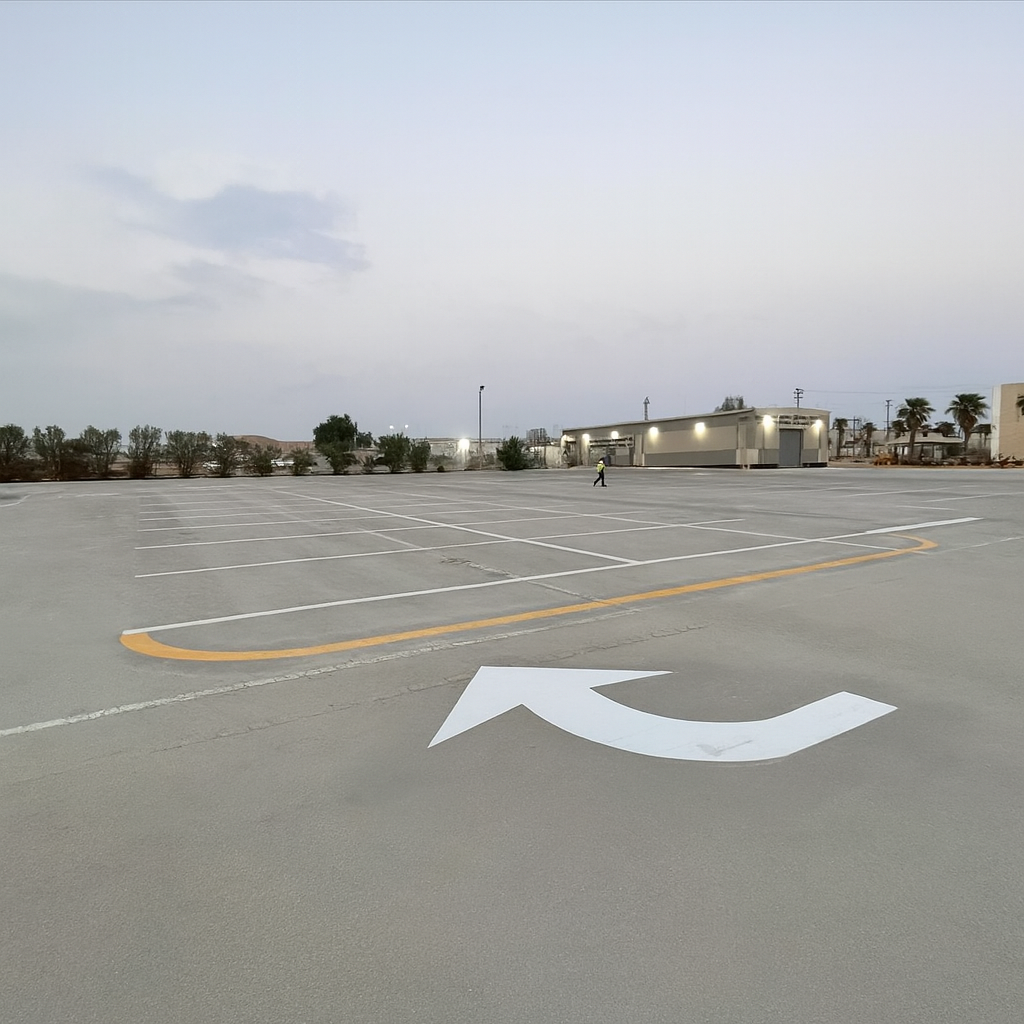
Using Unapproved Materials
A contractor should not replace the approved paint, thermoplastic, beads, or primer without written authorization.
Poor Surface Preparation
Dust, oil, moisture, or loose pavement can cause premature peeling or loss of adhesion.
Incorrect Line Dimensions
Wrong widths, lengths, gaps, or positions can create operational and safety problems even when the material quality is acceptable.
Inconsistent Glass Bead Application
Uneven bead coverage can produce poor or irregular night-time visibility.
Incorrect Thermoplastic Temperature
Application outside the correct temperature range may damage the material or reduce bonding.
Opening the Road Too Early
Vehicles can track, deform, or contaminate markings that have not dried or cooled sufficiently.
Failing to Remove Conflicting Markings
Old lines can remain visible and provide drivers with contradictory information.
Missing Quality Records
Work may be rejected when the contractor cannot provide material, application, calibration, or inspection documentation.
How to Select a Compliant Road Marking Contractor
Project owners should evaluate more than the contractor’s price.
A suitable road marking contractor should demonstrate:
- Experience with comparable road projects
- Knowledge of Saudi authority requirements
- Ability to interpret technical drawings
- Approved application equipment
- Trained and experienced crews
- Material traceability procedures
- Surface preparation capabilities
- Traffic-management experience
- Inspection and testing procedures
- Completed project references
- Corrective-work capability
- Clear technical documentation
A contractor should also be able to explain how it will verify compliance rather than simply stating that the work will follow “standard specifications.”
Why Choose EuroSys for Road Marking Projects?
EuroSys for Metal Industries provides road marking services for highways, parking areas, industrial facilities, and infrastructure developments across Saudi Arabia.
Its road marking capabilities include:
- Surface cleaning and preparation
- Cold-paint road marking
- Thermoplastic road marking
- Lane and road-edge markings
- Directional arrows and symbols
- Pedestrian crossings
- Parking area striping
- Industrial-zone markings
- Traffic and worksite safety
- Quality inspection and control
EuroSys has completed road marking projects involving cold paint and thermoplastic applications for major clients and developments in different regions of the Kingdom.
Learn more about the company’s experience and end-to-end capabilities on the About EuroSys page.
Request a Road Marking Quotation in Saudi Arabia
Before pricing a road marking project, the contractor should receive the approved drawings, material specifications, estimated quantities, project location, surface details, traffic conditions, inspection requirements, and delivery schedule.
If you need assistance with road marking specifications Saudi projects require, EuroSys can assess the scope and prepare a solution based on the approved project documents.
Ready to Start Your Next Project?
Get a free consultation and a detailed quote from EuroSys for Metal Industries. We handle design, fabrication and installation, from concept to handover.
Contact EuroSys to discuss your project and request a road marking quotation.
Frequently Asked Questions
What documents define road marking requirements in Saudi Arabia?
Requirements may come from the Saudi Roads Code, the responsible authority, approved project specifications, issued-for-construction drawings, material approvals, method statements, and consultant instructions.
Does Ministry of Transport compliance apply to every parking or private road?
Not necessarily. The responsible authority depends on the road’s ownership, classification, and location. Municipalities, development authorities, royal commissions, industrial-city authorities, and private project owners may have additional requirements.
Which material is used for Saudi highway markings?
Thermoplastic is commonly considered for durable permanent road markings, while other approved systems may be required for specific locations or functions. The contractor must use the material stated in the project specifications.
Are glass beads required for road markings?
Reflective glass beads are commonly used to improve night-time visibility. Their type, grading, application rate, and required performance must follow the approved technical specification.
How is road marking quality inspected?
Inspection may include checks of surface preparation, position, dimensions, material temperature, thickness, colour, alignment, glass bead distribution, retroreflectivity, skid resistance, adhesion, and finished appearance.
Can a contractor change the specified road marking material?
The contractor should not make a material substitution without submitting the alternative and receiving formal approval from the authorized project representative.
How can road marking compliance be verified before full application?
A trial section can be completed and inspected to verify the material, surface preparation, equipment settings, thickness, visibility, adhesion, and finished appearance.
Related Articles:
- Thermoplastic vs Cold Paint Road Marking: Cost and Durability
- Parking Lot Striping Standards and Stall Dimensions in Saudi Arabia
- Road Studs and Reflective Markers: Selection Guide for Saudi Roads
- Speed Bumps and Traffic Calming Devices: Standards and Placement
- Wheel Stops and Parking Barriers: Types, Materials and Installation
- Accessible Parking Bay Marking: Layout and Signage Requirements
- Industrial Floor Marking for Warehouses: Safety Colour Coding
- Airport and Port Pavement Marking: Requirements and Challenges