

Anyone specifying a powder-coated metal structure eventually runs into the same practical questions: what thickness to specify, how to verify it once the coating is cured, and whether the measured result is actually suitable for the exposure conditions the structure will face. Powder coating film thickness refers to the thickness of the cured coating layer, usually measured as dry film thickness (DFT). For light indoor applications, a range around 50–75 microns may be appropriate, while exposed outdoor metalwork often calls for a different thickness or an entirely different coating system altogether.
Ready to Start Your Next Project?
Get a free consultation and a detailed quote from EuroSys for Metal Industries. We handle design, fabrication and installation, from concept to handover.
There’s no single thickness figure that guarantees a longer service life on its own — the right answer depends on the project specification and the powder manufacturer’s technical data sheet. Before accepting a finished structure or signing off on a coating job, it helps to understand how thickness is measured, why it varies by application, and what range makes sense for the exposure your project involves. The sections ahead break down these points so you can read a technical data sheet with confidence and ask the right questions before work begins.
What Thickness Should Powder-Coated Metal Have?
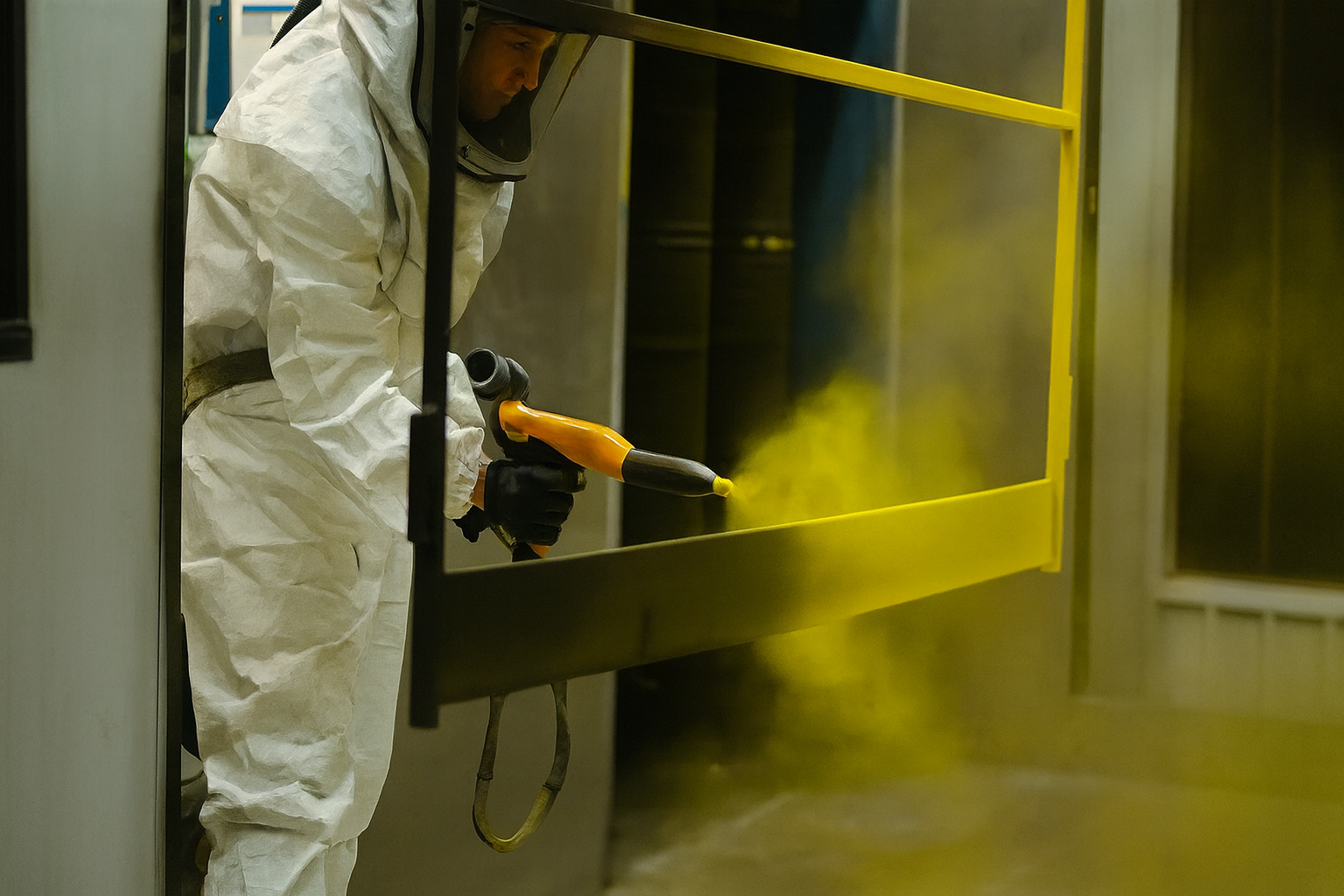 Powder coating film thickness varies by application, exposure level, and performance requirements, so no single figure applies universally. The ranges below are indicative starting points meant to guide planning, not fixed acceptance limits for every project.
Indoor Metalwork: Indicative Thickness Ranges
Light indoor metalwork, such as decorative fixtures or furniture components, commonly falls around 50–75 microns of cured coating thickness. Some indoor or light industrial parts may be specified closer to 50–100 microns, depending on the finish and intended use.
Outdoor and Coastal Metalwork: System Requirements
Outdoor decorative metalwork generally calls for a thicker dry film thickness than indoor pieces, since it must withstand sun exposure, moisture, and shifting weather conditions. Indicative application ranges for outdoor powder-coated steel often extend from 75–100 microns, with some projects reaching 80–120 microns.
Beyond the numbers themselves, several factors shape the right metal coating specification for exterior use:
- Surface preparation: proper cleaning and pretreatment directly affect how well the coating bonds to the substrate.
- Adhesion performance: a well-adhered film resists peeling and chipping under temperature swings and humidity.
- Powder selection: the formulation needs to match the exposure conditions, since not every powder type performs the same outdoors.
Heavy-Duty Coatings: When Ranges Differ
Coastal, marine, or highly corrosive industrial environments demand more than simply applying a thicker single coat. These settings often call for a suitable primer or a multilayer system, with the total dry film thickness tailored to the project’s specific performance requirements.
Indicative heavy-duty ranges fall around 100–150 microns, and some functional coating systems exceed 200 microns. These figures apply strictly to systems designed for such conditions and should not be extended to unrelated powder formulations.
It’s also worth distinguishing between a coating system’s specified total DFT and the thickness required for each individual layer within a multilayer build. In every case, the project specification and technical data sheet take precedence over any illustrative range mentioned here.
Electrostatic Powder Coating for Metal
Electrostatic powder coating is a finishing process in which electrically charged powder particles are applied to a grounded metal surface and then cured under heat to form a durable, even layer. Powder coating film thickness matters here because it directly determines how well the coating resists corrosion, abrasion, and long-term exposure, so it has to be matched to the metal type and the conditions the item will face.
Electrostatic Powder Coating for Metal
Metal items don’t all need the same finish, which is why this service is offered as a tailored option rather than a one-size-fits-all solution. Iron and other metal structures, panels, and fabricated parts can be coated to meet specific project requirements, with checks in place to confirm that the applied thickness and adhesion actually meet the specification — rather than assuming a single thickness setting will work for every item.
Buyers preparing a coating request should keep a few points in mind before the work begins:
- Metal type: Identify the base metal (iron or other metal substrates) since surface preparation and powder compatibility depend on it.
- Exposure conditions: Clarify whether the item will face outdoor weathering, industrial environments, or indoor use, as this affects the coating specification.
- Required DFT: State the required dry film thickness upfront so the coating process can be set to match the target range.
- Acceptance criteria: Note any project-specific standards or specifications the coated item must satisfy before approval.
- Verification method: Ask how thickness and adhesion checks will be recorded, so results can be reviewed and documented against the agreed criteria.
Defining these details in advance helps avoid mismatches between the coating applied and the performance expected from the metal item once it’s in service.
How Does Film Thickness Affect Service Life?
Powder coating film thickness influences durability mainly through how evenly the coating covers the part and how well it was cured. A compliant thickness reading on a flat surface says little about coverage at edges or the cure quality underneath, so service life depends on several factors working together, not thickness alone.
Thin Coverage at Edges and Recesses
Coating that falls below the specified thickness often leaves weak coverage at edges, corners, welds, and recessed areas where powder naturally thins during application. These spots are typically the first to show corrosion or wear. Thickness readings should always be checked alongside coating continuity and the overall condition of the finished surface, not treated as a standalone pass/fail figure.
Excessive Build and Finish Defects
Too much coating thickness brings its own set of problems. Excess build can cause an uneven appearance, orange peel texture, or shifts in gloss and color across the part.
- Flexibility issues: Overly thick films can crack or chip more easily under impact or bending stress.
- Adhesion problems: Depending on the powder formulation and curing conditions, excessive buildup may reduce how well the coating bonds to the substrate.
Not every thick coating fails — some powders and applications tolerate higher build without defects — but it raises the risk of finish and performance issues.
Surface Preparation, Curing, and Exposure
Before any powder is applied, the metal surface needs to be free of oil, grease, rust, salts, and other contaminants. Proper powder coating pretreatment sets the foundation for adhesion regardless of how carefully film thickness is controlled afterward.
Curing matters just as much as surface pretreatment. The actual metal part must reach and hold the correct cure temperature for the required time — relying only on the oven’s air temperature reading can be misleading, since metal mass and thickness affect how quickly the part itself heats up.
Coating service life ultimately depends on a combination of elements:
- Substrate: The base metal type affects how the coating bonds and performs over time.
- Powder formulation: Different powder chemistries offer varying resistance to UV, chemicals, or abrasion.
- Pretreatment: Surface cleaning and conversion coatings directly affect adhesion.
- Adhesion: How firmly the cured film bonds to the substrate determines resistance to chipping and peeling.
- Exposure environment: Outdoor, coastal, or industrial settings place different demands on the coating.
- Primer system: Whether the specified system includes a primer layer affects corrosion resistance and overall durability.
It’s worth stating clearly: a compliant dry film thickness reading does not, by itself, confirm adhesion, adequate cure, corrosion resistance, or a specific number of years in service. Edge thickness, cure conditions, and surface pretreatment all need to be evaluated together to understand how long a coated part will actually perform.
How Is Powder Coating Thickness Measured?
Powder coating film thickness measurement happens in two stages: a rough estimate before curing and an accurate DFT reading after curing. Each stage uses different tools because the material itself changes form once it passes through the oven.
Before Curing: Powder-Build Estimates
Pre-cure powder measurement only estimates how much powder has built up on the surface before it melts and fuses in the oven. A powder comb or a suitable electronic probe can give this rough reading, but it should never be confused with the final dry film thickness. Loose powder height and cured DFT are two different values, and only the cured reading represents the actual coating thickness.
After Curing: Gauges for Different Substrates
Once the coating has cured, the substrate type determines which DFT gauge applies. Different metals respond differently to magnetic and electromagnetic fields, so the inspection method has to match the base material and the layer structure being checked.
- Magnetic thickness gauge: Used for cured coatings on steel or iron, this non-destructive method reads the film thickness without damaging the part.
- Eddy-current gauge: Applied to aluminum and other suitable non-ferrous metals, measuring thickness through induced electrical currents rather than magnetism.
- Ultrasonic methods: Suitable for nonmetal substrates or certain multilayer arrangements where magnetic or eddy-current readings aren’t applicable.
- Non-destructive gauges: Leave the coated item fully intact, making them the preferred choice for routine post-cure inspection.
- Microscopic cross-section: Offers a detailed look at individual layers but damages the sampled area, so it’s reserved for cases needing deeper verification.
Instrument selection and calibration must always correspond to the substrate and the inspection goal, since using the wrong gauge type can produce misleading readings.
Multiple Readings and Difficult Measurement Areas
A single reading rarely tells the full story. Post-cure inspection should include multiple documented locations across flat surfaces and critical areas, since coating behavior can vary significantly across a part’s geometry.
- Edges and curvature: Tend to carry thinner or thicker coating than flat sections, affecting how readings should be interpreted.
- Surface roughness and welds: Can distort gauge contact and produce inconsistent values if not accounted for.
- Recesses and tight corners: Often receive uneven powder deposition, making them harder to measure accurately.
- Substrate thickness and multiple layers: Both influence how magnetic or eddy-current gauges respond, so these factors need to be factored into the final interpretation.
Recorded results should always be compared against the project’s specified thickness limits rather than judging the entire item based on one isolated reading.
Specifying and Checking Coating Thickness
Powder coating film thickness must be stated clearly in a project specification, measured in defined units, and verified at agreed inspection points — otherwise a cured DFT reading carries little weight on its own. Getting the coating thickness requirement right starts with unit clarity and ends with a documented acceptance procedure.
Microns, Mils, and Unit Conversion
One mil is one-thousandth of an inch and equals 25.4 microns — it is not the same as a millimeter. One micron equals 0.001 millimeter, so the two systems are easy to confuse if units aren’t specified explicitly.
For quick reference when converting microns to mils:
- 50 microns is approximately 1.97 mils.
- 75 microns is approximately 2.95 mils.
- 100 microns is approximately 3.94 mils.
Acceptance Criteria Beyond a DFT Reading
A single dry film thickness number rarely tells the full story. A procurement checklist should cover several inspection points before any coating is approved:
- Substrate and exposure: identify the base metal and whether the application is indoor, outdoor, coastal, or industrial, since each environment places different demands on the film.
- Coating system: specify the powder type and confirm whether a primer coat is required beneath it.
- Required DFT: state the cured film thickness target along with the measurement units, microns or mils, to avoid ambiguity.
- Sampling locations: establish where on the part or structure thickness readings and other checks will be taken.
- Acceptance limits: define the permitted range around the target average.
- Supporting checks: request adhesion, cure, coverage, and appearance checks alongside the DFT reading itself, since thickness alone does not confirm proper curing or bonding.
A target average and its permitted minimum or maximum should always come from the applicable project specification or the powder manufacturer’s technical data sheet, not from indicative ranges found elsewhere. For a broader view of how these criteria fit into a complete specification, the overview on architectural powder coating standards outlines how inspection points and acceptance criteria are typically structured for architectural and industrial projects.
Recommended products from European Systems
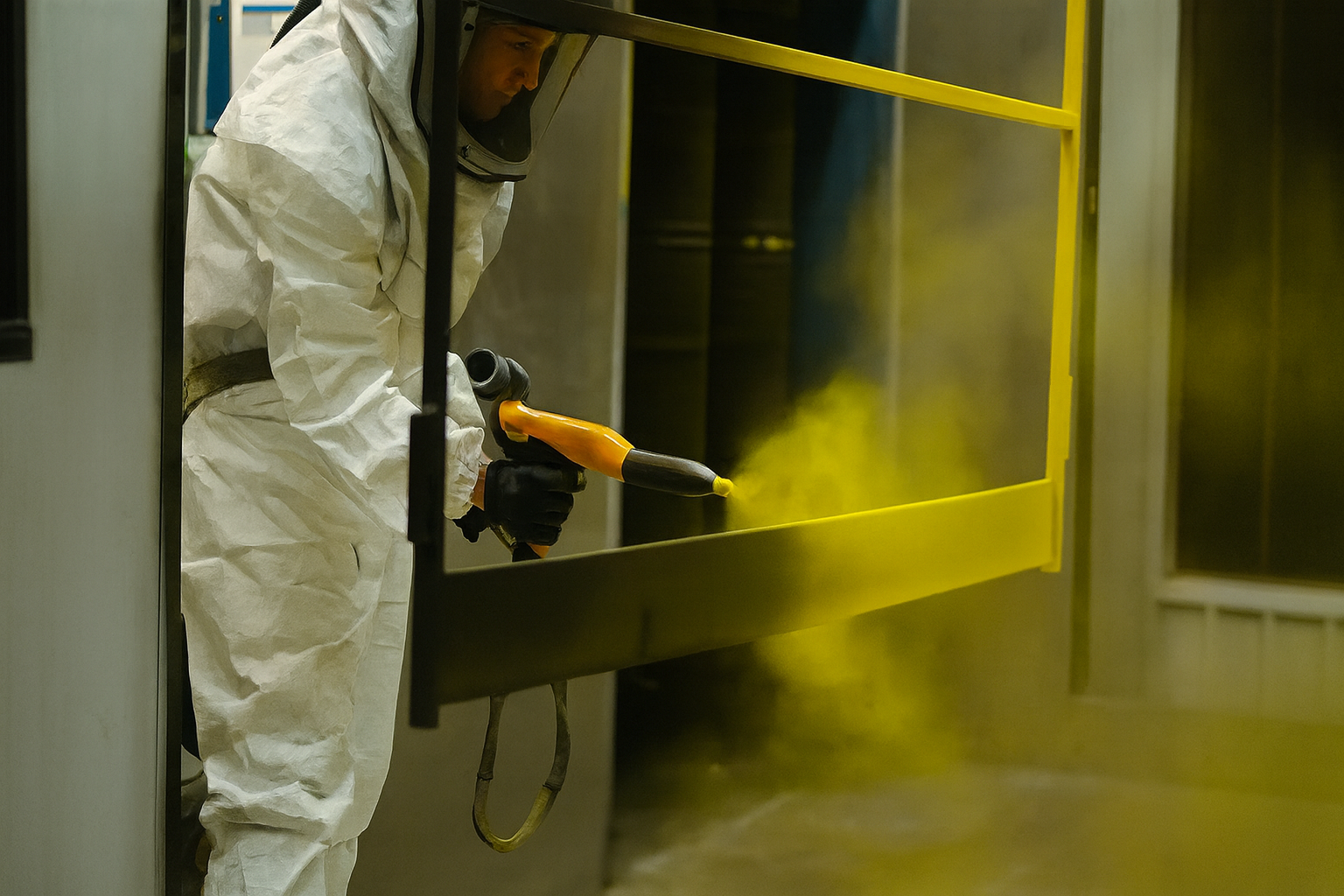 Eurosys offers an integrated range of metal fabrication and surface-finishing services, built on engineering design, manufacturing, and installation experience dating back to 2013. Among what the store provides is electrostatic powder coating, a service that reflects its approach of combining precise process control with durable results, backed by work carried out for major clients including Aramco, SABIC, and the Royal Commission. Reach out for a technical consultation or quote on your coating requirements.
Electrostatic Powder Coating for Metal
This service covers iron and other metal components through a controlled process that starts with surface preparation, followed by electrostatic powder application, and ends with quality checks on coating thickness and adhesion before packaging. Monitoring powder coating film thickness at this stage helps verify that the coating meets the specified thickness; adhesion also depends on surface preparation and curing.
The finished coating is designed to protect metal surfaces against rust and weather exposure while delivering a durable, long-lasting finish. Those planning projects that require consistent powder coating film thickness across large volumes of metal parts can review the Electrostatic Powder Coating for Metal service for structural components, enclosures, decorative panels, or other fabricated metal items.
Frequently Asked Questions About Powder Coating Film Thickness
Here are answers to common questions about measuring and understanding powder coating film thickness.
How much thickness does a powder coat add?
Cured build varies depending on the formulation and the application method used. As an indicative range, many general applications fall around 50–100 microns, though this is not a universal specification and can differ by project requirements.
What are the downsides of powder coating?
In terms relevant to thickness, inadequate or excessive build can affect coverage or finish quality. Correcting a cured coating that falls outside the desired range may require rework, and thickness alone cannot confirm adequate surface preparation or proper cure.
What is DFT in thickness?
DFT, or dry film thickness, refers to the measured thickness of the coating after it has fully cured. It is commonly reported in microns or mils and serves as the standard way to describe the final coated build.
Ready to Start Your Next Project?
Get a free consultation and a detailed quote from EuroSys for Metal Industries. We handle design, fabrication and installation, from concept to handover.
Powder coating film thickness should always be specified according to the substrate, exposure conditions, and the coating system in use, then verified after curing alongside adhesion, coverage, and overall finish quality. Getting this balance right protects metal structures from corrosion and wear while keeping the finish consistent across every project. For technical consultation or a quotation on metal coating requirements, you can reach out to the European Systems store.
Read also